Factory premium audio - retrofit screens
Your car left the factory with JBL on the door grille, or Harman Kardon on the tweeter, and now you want CarPlay. The shop says the amplifier dies with the radio. Sometimes it does. Often it doesn't, and the badge isn't what decides which.
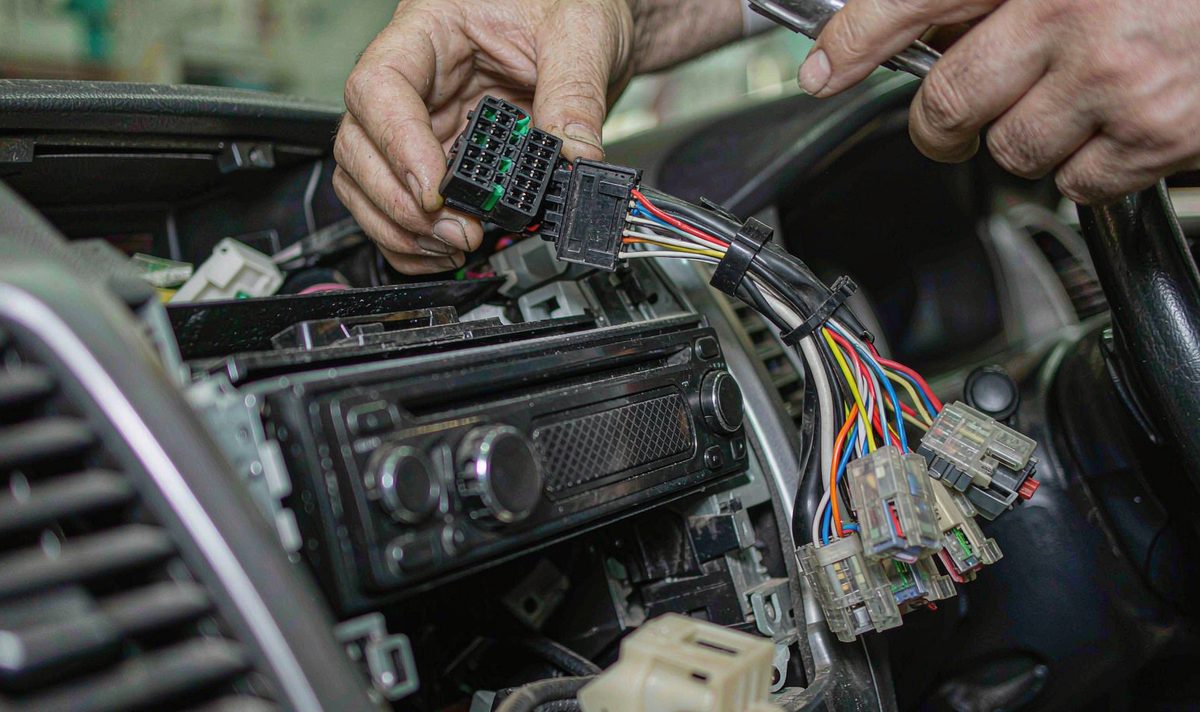
The speakers usually stay, the amplifier sometimes stays, and what decides it isn't the badge. It's how the audio leaves the radio: four analogue channels down a bundle of wire, or a digital stream on a bus only the factory amplifier understands. Answer that and the rest stops being a gamble.
Both badges belong to one company. HARMAN has owned JBL since 1969, Harman Kardon goes back to 1953, and HARMAN has been a Samsung subsidiary since 2017. None of that tells you what's behind your radio.
The badge marks a package your carmaker ordered: speakers, an amplifier and a tuning curve signed off for that cabin. The same badge lands on different hardware. One car gets nine speakers and a multi-channel amp in the boot; another gets six better speakers and no amplifier at all.
That's where quotes go sideways. An installer prices the job from the badge, pulls the radio, finds wiring that doesn't match, and the number moves. I've watched that go wrong, and it starts with somebody treating a logo as a part number.
It tells you who tuned the system. It doesn't tell you how the audio reaches the speakers, and that second detail decides whether your new screen keeps the sound or kills it.
So find out which arrangement you own before you order anything, and do it with a torch before you spend a cent.
Three arrangements sit behind a premium badge.
Your radio's own amplifier drives the speakers: better speakers, sometimes a small sub, no amplifier module anywhere. That's the easy case. Check impedance first, though: factory speakers are often 2 ohm, and a unit rated for 4 ohm runs hot or clips.
An amplifier sits in the boot or behind a side panel and takes low-level channels from the radio - usually four, sometimes two or six - plus a turn-on signal that tells it the radio is awake. Keep that amplifier and your new unit only has to feed it a clean signal at the right level. This is what people mean when they say the sound survived the swap.
Here's the thing: the amplifier is a node on a network and the radio is another. On A2B the audio travels as a digital stream on one unshielded twisted pair, carrying as many as 32 channels each way between nodes up to 15 m apart. On MOST it's a fibre ring at 25, 50 or 150 Mbps, and a break anywhere in the ring silences the whole network. Pull the radio and the amplifier has nothing to talk to: it doesn't sound bad, it goes quiet, and that's the frustrating part, because nothing is broken and nothing plays.
That silence catches people fitting CarPlay to a MOST fibre optic factory audio system: the screen works, the ring doesn't, and no menu brings the speakers back. I hear that one described as a dead amplifier more often than not.
Systems like these need a vehicle-specific interface that speaks the bus for the amplifier. It's matched to your car, which is why a generic box disappoints.
Two tells before you take anything apart:
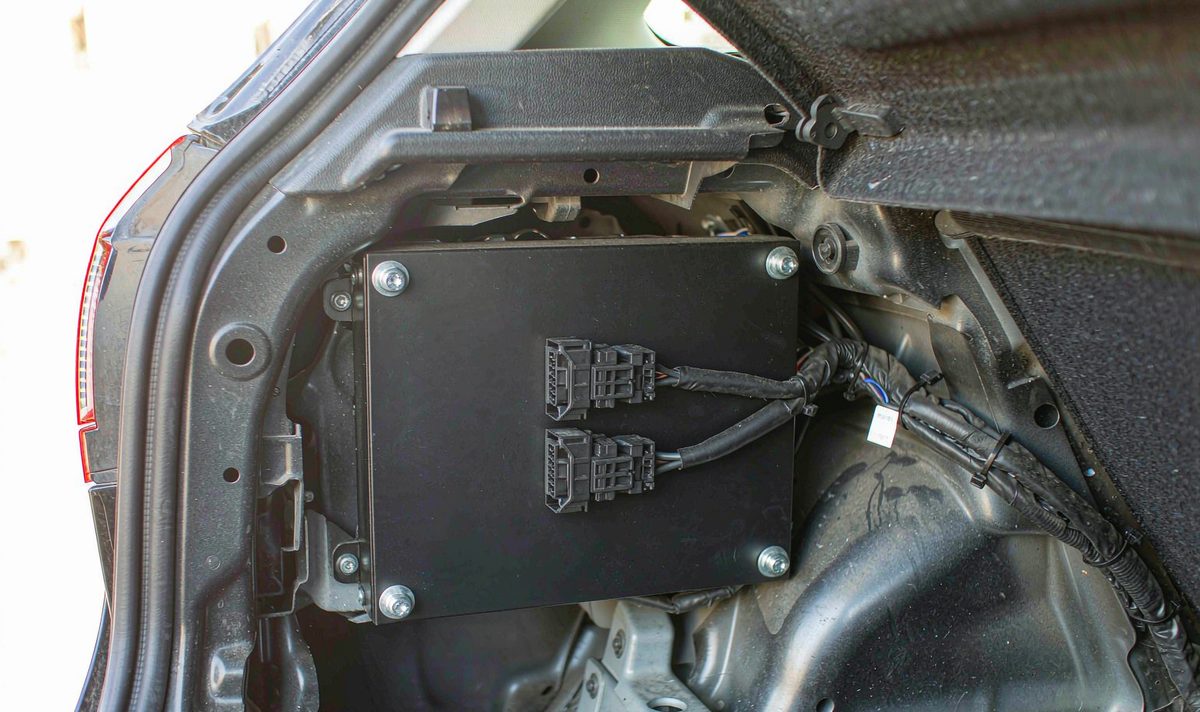
Once you know the system, the real decision is this one. Both routes work, and they fail differently.
You keep the speakers, the amplifier and the tuning signed off for that cabin. The new unit only supplies signal, so its own amplifier sits idle. What it does have to supply is clean: an android head unit external amplifier preamp output at the level the factory amp expects, plus a turn-on feed. Without it the amp stays asleep and you'll swear the new unit is dead.
You also inherit whatever the factory tuning did, good and bad.
You run speaker-level wiring from the new unit, sometimes through a bypass harness, and the factory amplifier leaves the chain, putting the crossovers and impedance matching in your hands. The sound is yours now, including with android car stereo with DSP sound tuning onboard.
A factory system with its own tweeter channel and a sub channel doesn't become a four-channel system without losing something.
Work down this list in order. Plenty start at the bottom, buy an interface they didn't need, then find the real fault was a missing turn-on wire.
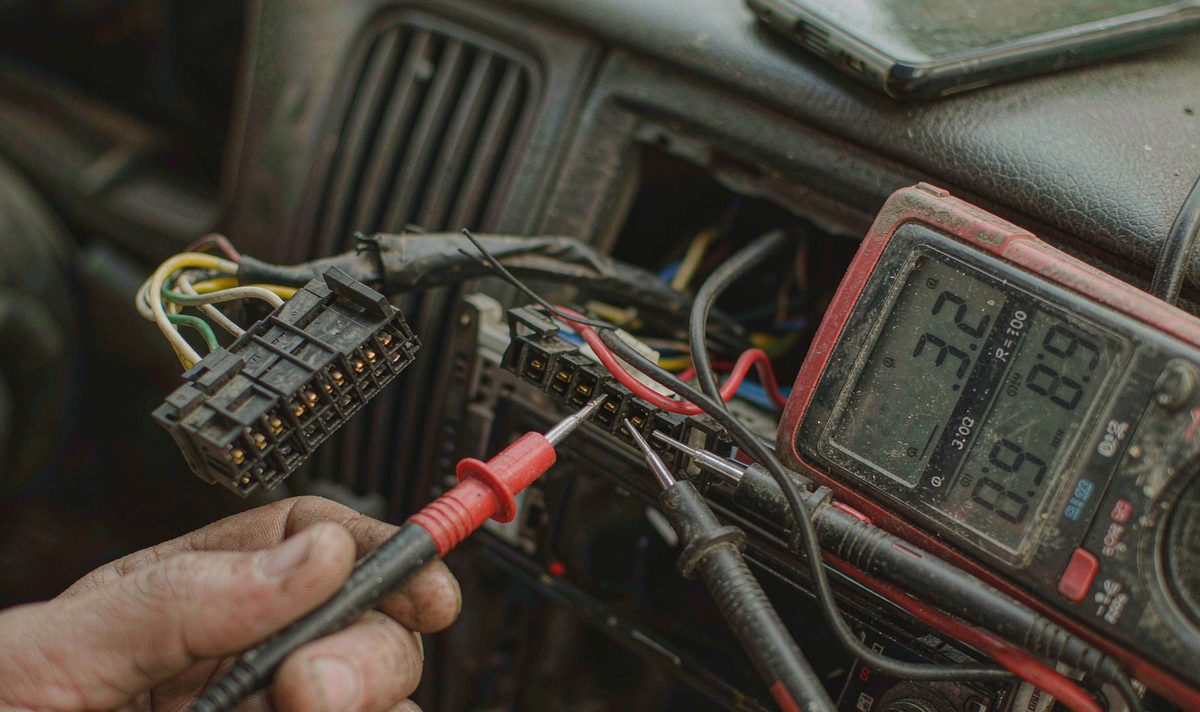
Count the speakers and look for the amplifier. Then measure them: unplug the radio, set a multimeter to resistance and probe a pair of speaker wires at the connector. A 4 ohm speaker reads about 3.2 ohm and a 2 ohm about 1.6, because you're measuring DC resistance rather than impedance. That number decides whether your new unit can drive them directly.
I'd write down what works today: fader, balance, subwoofer level, centre channel, speed-related volume - that's your baseline, and anything missing afterwards was lost in the swap.
Signal level comes first. Line-level input fed from speaker-level outputs distorts early, and a speaker-level input fed from line outputs gives you a system that whispers, so match the two and set your gain at about three quarters of volume.
Then the turn-on. An amplifier has to be told to wake up, and that wire is the one people forget. A weak ground adds hiss and, on some cars, a pop at switch-on. It's tedious to trace, cheap to fix. Noise that only appears with the engine running is alternator whine, not a dying amplifier.
Now the spec sheet earns its keep. Check the pre-out voltage, whether those outputs are filtered, and how many channels the amplifier expects. An interface box also has to match your car - model, year and trim, not just the brand. An android car stereo wiring harness adapter can fit the connector and still be wrong for the amplifier.
Where the car wakes its amplifier over the vehicle network, an android head unit CAN bus decoder box does that translation, and its profile has to be set or the amplifier never comes on.
If the first three levels point at a part, the list is short: an interface for a digital amplifier, a line converter with summing for an analogue one, a bypass harness if the amplifier comes out, or a replacement unit. Buying that first is how people end up with a box that solves nothing.
Keeping the amplifier keeps the speakers working, and that's usually the promise, though it doesn't keep everything.
Some factory systems shape the sound before the amplifier, inside the radio you're removing. The new unit then feeds a flat signal into an amplifier tuned for a shaped one, and it sounds thinner. Centre channel and surround modes usually leave with the radio too.
Chimes are the one nobody warns you about. If your warning tones came from the radio, they move to a small speaker or vanish, and speed-related volume survives only if the new unit reads the same vehicle data.
| What is behind the radio | What the new unit has to provide | What you keep | What usually goes |
|---|---|---|---|
| No amplifier - the radio drives the speakers | Speaker-level outputs that suit the speaker impedance | Speakers and their mounts | The factory tone curve, unless you tune the new unit to replace it |
| Analogue amplifier on low-level inputs | Line outputs at a matching level, plus a turn-on feed | Speakers, amplifier and its tuning | Centre channel and surround mixing that happened in the radio |
| Digital amplifier on A2B or MOST | A vehicle-specific interface for that car and model year | Speakers and amplifier, once the interface is configured | The amplifier stays silent until the interface is right |
Read your row left to right: what's there, what you supply, what quietly leaves. The third row is the one that gets people, because nothing is broken and nothing plays.
Five questions, and anyone who's done this work will answer them without leaving the car.
A system that plays fine at the bench and hisses at road speed is a fifteen-minute fix while the trim is off, and an awkward second appointment once it's back together.
If your checks come back clean and the sound is still thin, the limit usually sits in the join between the new unit and the factory amplifier, not in either part alone. That's a fitment question: send the model year, the trim and a photo of the connector to WITSON and we'll tell you which system you have. Specs are listed model by model here: universal one and two DIN head units. We ship to North America, Europe and Australia.
Tell us the model year, the trim and what the badge says, and we'll check whether your factory amplifier can stay in the chain.
Tell us your car, we will check what fitsUsually yes, and it's the cheapest part of the job: the speakers are already mounted and aimed for that cabin. The catch is impedance: factory speakers are often 2 ohm, and a new unit rated for 4 ohm runs hotter and clips sooner. Measure a pair at the connector first - 3.2 ohm means a 4 ohm speaker, 1.6 means 2 ohm.
If it takes analogue signal from the radio, yes, provided the new unit has line outputs at a sensible level and a turn-on signal. If it sits on A2B or MOST, it needs a vehicle-specific interface to translate. Without one it stays asleep and the car is silent, which isn't the same as broken.
Not to make sound come out. A DSP earns its place when you want to reshape the factory curve, correct time alignment, or sum odd channel counts into something a cleaner amplifier can use.
Because level and shaping moved. The new unit may feed a signal hotter or flatter than the amplifier was tuned for, or the radio-side processing that shaped the original sound is gone. It's an annoying fault to chase by ear, so work through gain first, then the interface configuration.