Car audio - EQ presets
Three presets in a dropdown, and none of them sounds like the record you know. That isn't your ears and it isn't a broken unit. A preset was tuned in a room with a sofa in it, and you listen in a glass box that moves.
I've seen plenty of drivers spend an evening dragging sliders and end up worse than the flat setting they started from, which is the annoying part: the sliders feel like progress. Here's the order I work in. Learn what each preset chases, check the free things first, build your own curve last.
Whoever built that curve did it by ear, in a room with a sofa and soft walls. So why does it fall apart in your car? You're driving something the size of a wardrobe, lined with glass.
Start with the bottom. A small sealed cabin raises the pressure at low frequencies, so the 60 Hz note that sat level on the bench reaches your ears louder. That's why a flat preset feels bass-heavy the moment you shut the door.
Then the top. Glass and hard trim reflect, while seats, carpet and the headliner soak up high frequencies, so a curve that lifted 8 kHz sounds sharp up front and dead behind you.
Then where you sit. The driver's seat is off centre, closer to one door speaker, so that side arrives earlier and louder and drags the stage toward the door. Fader and balance shift the level; time alignment's what fixes arrival time.
And road noise. Tyres and wind put most of their energy down low, so a bass line you hear when parked disappears at 100 km/h. People lift bass to beat the noise, then complain the system booms in the driveway.
A preset isn't a recipe, it's a shape. Names and numbers differ between brands, but the intent is easy to read.
Rock pushes a shallow V: a lift near 60 to 120 Hz for kick and bass, another near 3 to 6 kHz for cymbal edge and guitar bite, and a gentle dip through 300 to 800 Hz where the snare body sits. Sounds exciting, and at volume it's the first curve to run out of headroom.
Pop goes the other way. Vocal forward means a small lift near 1 to 2 kHz, restrained bass, and a softer top so a loud compressed master doesn't turn harsh. It's the preset that suits a factory speaker, because it asks the least of the cone.
Classical is the polite one: wide, gentle, often a small cut at the bottom rather than a lift, and almost no treble boost, because strings and brass carry energy up there already. If your unit offers a flat setting, that's the nearest thing to it.
Where the labels stop helping is the hardware underneath. A fixed band EQ can only move the bands it was given, so android car stereo with DSP sound tuning is a different animal: parametric bands, per-channel delay, and a level match per speaker instead of one shared curve.
The shape each preset is chasing, band by band
Above the line is a boost, below it a cut, and the bar height stands for how far the preset moves that band. It shows direction and rough size, not a spec sheet: your unit may call the same shape powerful, vocal or studio.
Before a slider moves, rule out the faults that look like tuning problems. What I see on arrival is a driver fighting a curve while a second boost sits on top of it. Sound familiar?
Zero every band, switch loudness and bass boost off, and play a track at the volume you actually drive at. Plenty of presets get called wrong after a test at a volume nobody uses.
USB, then Bluetooth, then radio. If the problem follows the source, you're chasing the wrong control. That's why android car stereo bluetooth audio codec comes up when a system sounds fine on one input and muddy on another.
Play a mono recording and sit between the seats. If bass thins out in the middle and returns when you lean toward a door, one speaker is wired backwards. Swap two wires. Silly fault, and it mimics a bad curve.
Judge the same track with the engine off, then at 80 km/h. Whatever you fixed for the parked version sounds thin on the motorway, because road noise masks the low end.
Three of those tell you the EQ isn't the problem. The fourth tells you how much of your curve is a highway correction.
A whine that climbs with engine revs isn't a tone curve. It's a ground loop, and lifting treble makes it louder, and that's why people decide the EQ broke something.
Ground your head unit chassis to bare metal on the body, not to a painted bracket. I've found half-seated RCA plugs behave like aerials, so keep signal cables away from the power run and check the shields.
If your car came with a factory amplifier, the signal passes through a box with its own fixed processing, and whatever you add stacks on top of it. That's why some cars sound harsh at 4 kHz no matter where the slider sits, and keeping factory JBL or Harman Kardon sound with an aftermarket screen is its own job. The phrase to search when ordering parts is android car stereo factory amplifier integration, and the spec that decides whether it works cleanly is the android head unit external amplifier preamp output voltage.
In our experience the usual suspect is that level mismatch, not the curve: low preamp voltage into an amp that wants more leaves the gain wound up, and a wound-up gain amplifies hiss as happily as music.
A whine that follows the throttle is wiring. A curve that sounds wrong is taste. They get confused every week.
Gain isn't a volume knob, and setting it at full volume is how tweeters die. Set your head unit around three quarters, raise gain until you hear distortion, then back it off.
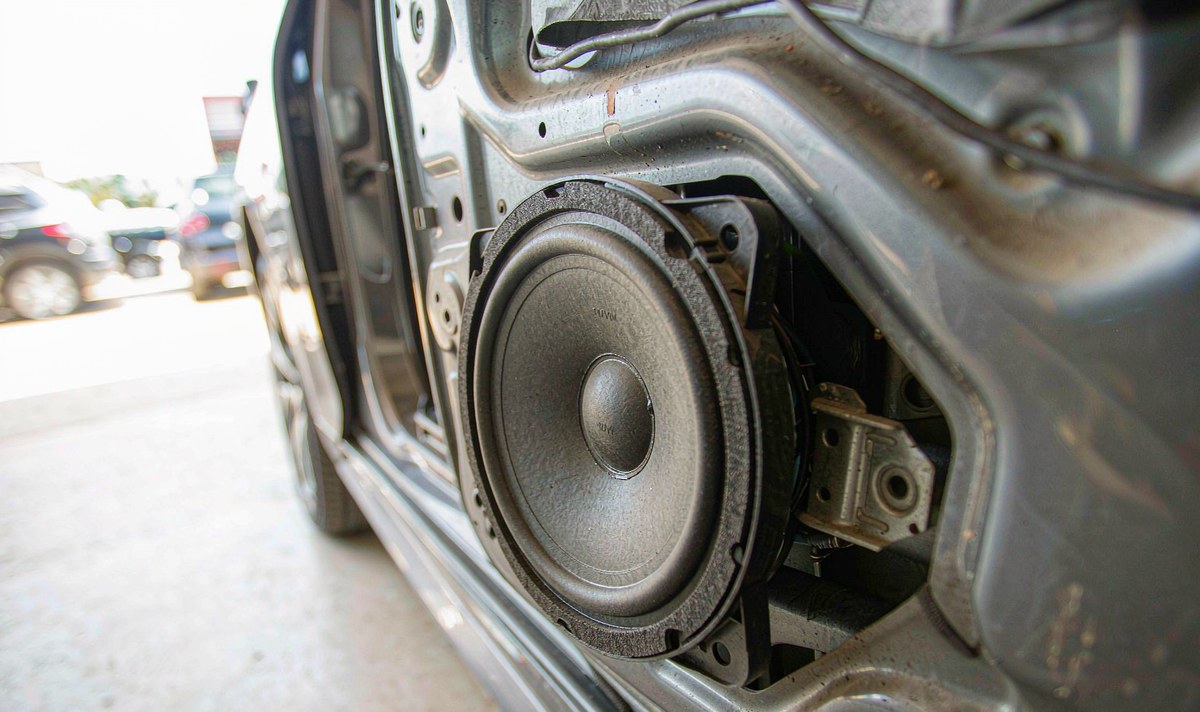
Crossovers matter more than sliders. A 6.5 inch door driver in a plastic door card has very little travel, and asking it for 50 Hz turns your door into a rattle. A high-pass around 70 to 90 Hz hands that job to a sub, and the midrange cleans up as a side effect.
Here's the awkward arithmetic. Three decibels of boost doubles the power demanded at that band, and ten decibels is ten times. A small channel asked for a big lift down low can't deliver it, so it clips, and clipping sounds like distortion rather than volume.
The honest limit sits in the cone, not the menu. If the driver can't move that far, the fix is a part rather than a setting.
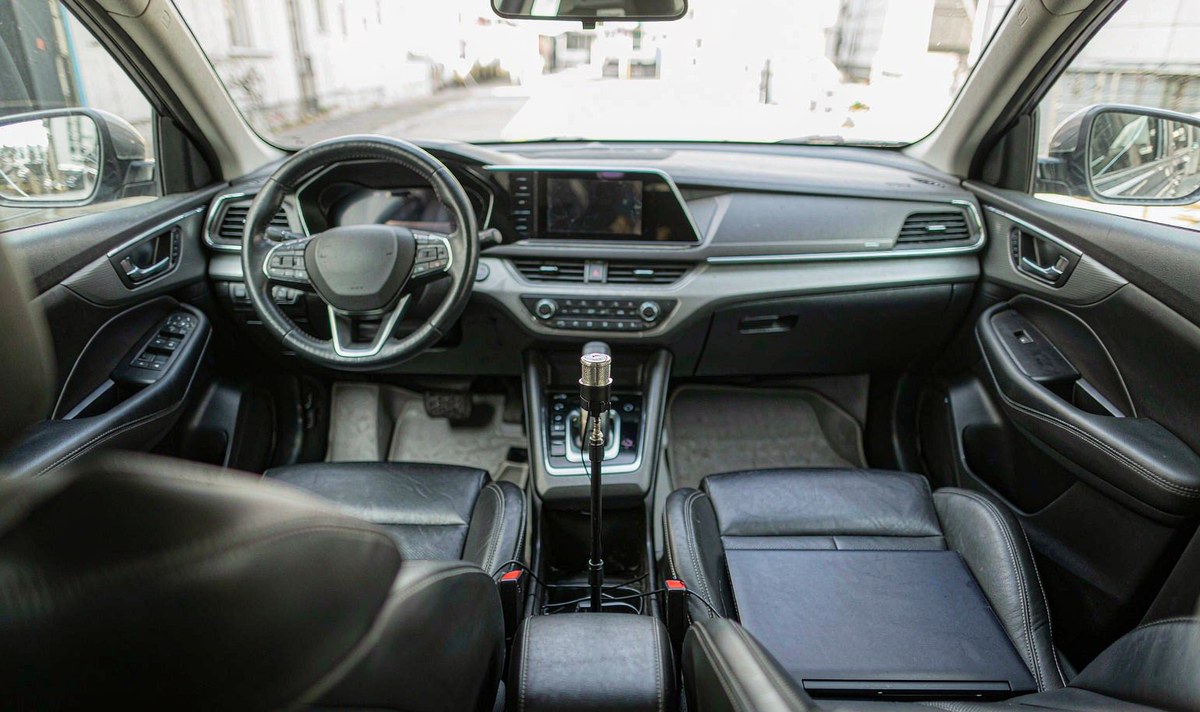
You need three tracks you know by heart: one with a bass line you can hum, one with a single voice, one with cymbals or strings you know are recorded bright.
Then leave it for a day. Ears adjust faster than taste does, and a curve you loved at midnight often sounds thin by morning, which is the maddening part of tuning by ear.
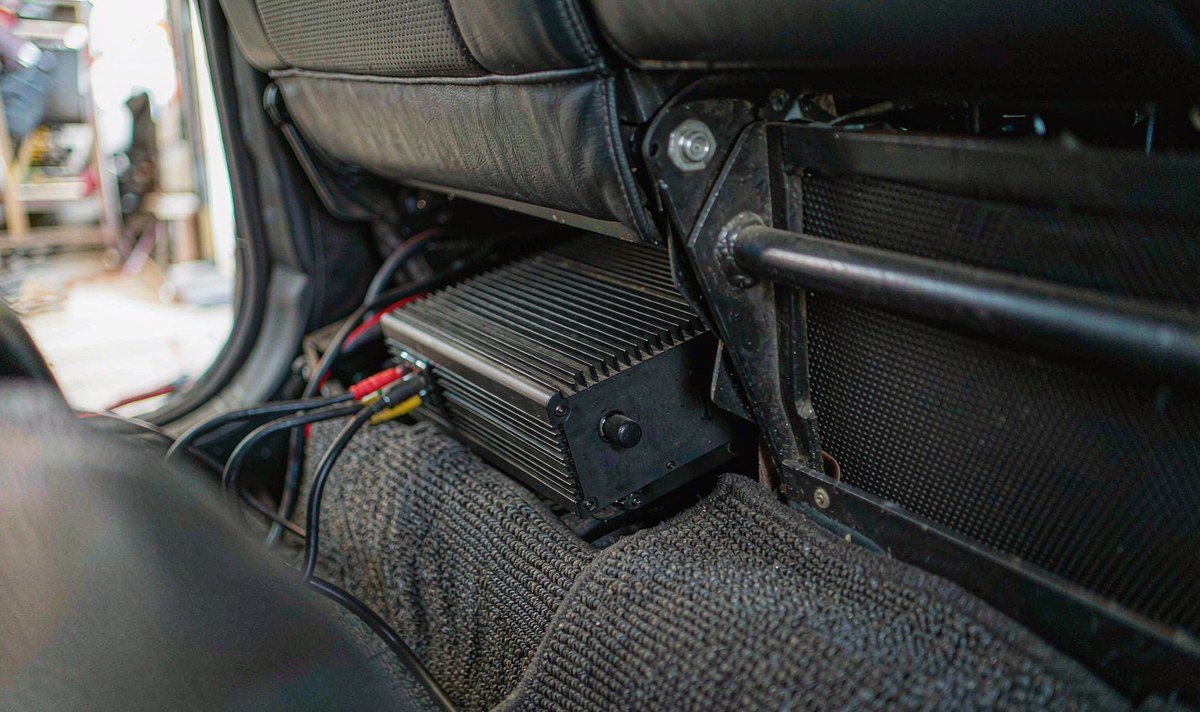
Three symptoms mean the limit is hardware, not settings: distortion at a moderate volume on bass-heavy tracks, a buzz from one door on certain notes, and sound that collapses the moment you turn it up.
This is the table I run when someone sends a recording and asks which part to replace.
| What you hear | What it usually is | Test that proves it |
|---|---|---|
| Whine that rises with engine revs | Ground loop, not a tone curve | Switch to USB with the engine running. Whine stays, it's wiring. |
| Bass vanishes between the seats | One speaker wired out of polarity | Mono track, lean left and right. Cancels in the middle, wires are reversed. |
| Fine on USB, muddy on Bluetooth | Lossy codec, not the EQ | Same file, two inputs. The difference follows the source. |
| Buzzy bass note at moderate volume | Cone travel or a loose door card | High-pass the door speaker and replay. Clean means travel, unchanged means trim. |
| Everything collapses when you turn up | Amplifier out of headroom | Back the gain down a quarter turn. Top end returns, it was clipping. |
Read it as a first filter: two rows can be true at once, and a reversed speaker plus a loose door card mimics one bad preset.
Check the mounting before you buy anything. A speaker screwed into a loose plastic adapter rings, and a rattling door card ruins a good curve. Tighten the fixings, add foam behind the trim, listen again.
Before you spend
Clean but thin: the missing piece is usually door treatment and a level match, not another band.
Distorted but quiet: amplifier headroom or speaker travel is the ceiling, and no curve lifts it.
Past that point the honest answer is a different speaker, a sealed door, or more amplifier, and a curve can't stand in for any of them. On European models with a factory amp and on North American cars with four basic speakers, that ceiling arrives at a similar place from different directions. If you're weighing a retrofit, our universal one/two DIN range shows what a current unit offers, and WITSON ships worldwide.
If you've set the curve, checked the wiring and it still sounds thin or harsh, tell us the car, the year and what's already fitted. We'll say whether the limit is the unit, the harness or the speakers.
Ask our support deskSend the model and the year, and a photo of the current connector if you have one.
You can, and it'll sound wrong in a specific way: too much bottom, too much edge on the strings, and a hole where the body of the orchestra should be. Classical wants a curve close to flat, so start from none and cut rather than boost.
Some builds store one curve per source, so the radio carries its own setting and you're hearing that one rather than the curve you saved.
There isn't an honest number without your speaker's rating and the amplifier's real output.
Not for a decent one. A fixed band EQ gets the tonal balance close, and that's most of what people notice. What it can't do is delay one side by a few milliseconds so both doors arrive together, which is the job a DSP exists for. If your unit has none, time alignment is the feature worth upgrading for.