Car infotainment - screen size
Nobody asks me which screen is better. They ask whether the big one will actually fit, and whether they'll still be able to read it at midday with the sun on it. Size is what sells on the listing. Fit and glare are what you live with, and a size picked the wrong way round is a tedious thing to undo once your trim is back in.
Both numbers are the diagonal of the glass, and that's exactly where the trouble starts. A diagonal tells you nothing about how wide or how tall the panel is, and those two measurements are what decide whether it drops into your dash or sits proud of it.
The arithmetic for a plain 16:9 panel is fixed: multiply the diagonal by 0.872 for the width, and by 0.490 for the height. That puts a 10.25 inch panel at roughly 227 x 128 mm and a 12.3 inch one at roughly 272 x 153 mm. Glass only. The bezel and the frame add to both, and the frame is usually the part that decides the job.
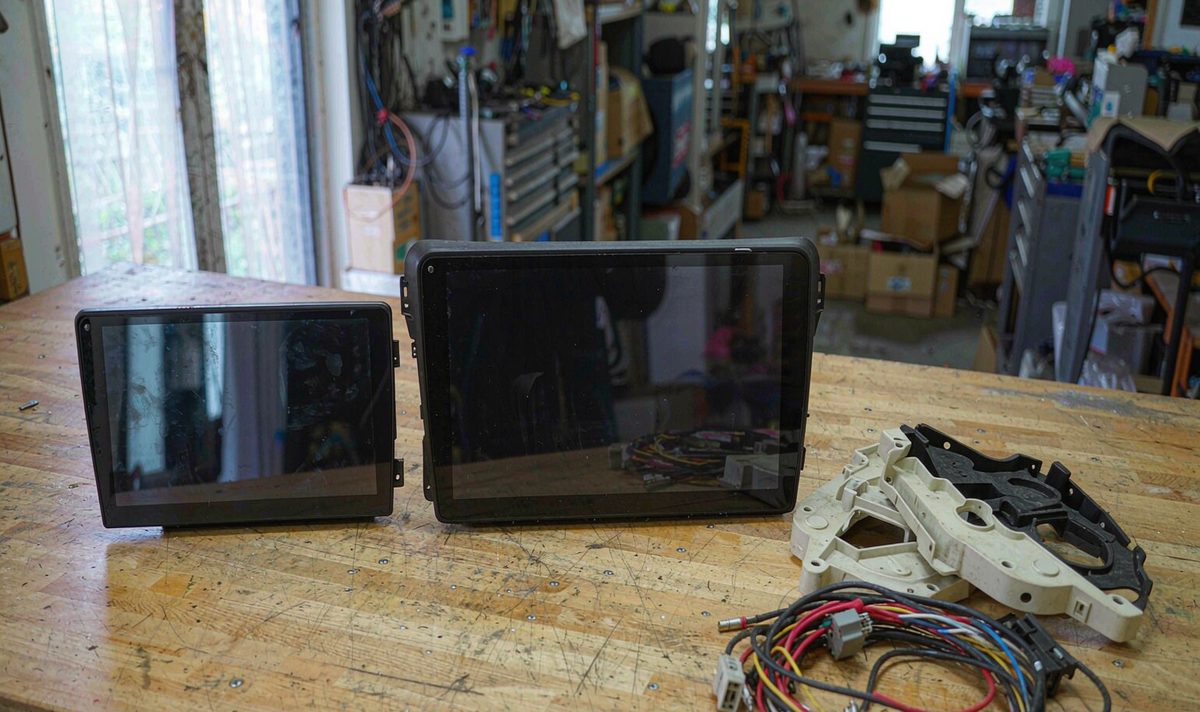
What trips buyers up is shape. Plenty of retrofit screens are wide, shallow bars rather than 16:9 rectangles, and a bar-style 12.3 panel can be shorter from top to bottom than a 10.25 rectangle. Compare the millimetres, not the inch figure on its own.
| What you are comparing | 10.25 inch panel | 12.3 inch panel |
|---|---|---|
| Diagonal | 260 mm | 312 mm |
| Glass at 16:9, about | 227 x 128 mm | 272 x 153 mm |
| Pixels per inch at 1280x720, about | 143 ppi | 119 ppi |
| Against a 180 x 100 mm double DIN slot | Wider than the slot, needs a frame | Wider and taller, needs a vehicle-specific frame or a bracket |
| Shape variants | 16:9 rectangle and wide bar versions both exist | 16:9 rectangle and wide bar versions both exist |
Read the opening row first. That's the row that decides whether you're buying a screen or buying a whole fascia.
Resolution deserves its own word, because it doesn't scale with size and people assume it does. An android head unit 1280x720 screen resolution panel is 1280 by 720 whether the glass is 10.25 inch or 12.3 inch, so the bigger panel spreads the same pixels over more area. Maps and video are fine. Small text and dense menus are where you'll notice it.
Now measure the car, because the opening settles the argument before the spec sheet gets a vote. A standard single DIN slot is 180 x 50 mm and a double DIN slot is 180 x 100 mm. Both panels above are wider than 180 mm, which means neither one drops into a standard slot. A large screen replaces the surrounding trim with a vehicle-specific frame, or it mounts on a bracket in front of your dash.
That's why the frame matters more than the glass. A double din android head unit dash kit is the part that decides whether the finished job looks factory or looks like a tablet taped to your dashboard, and it's the part people order second and then wait three weeks for.
If you haven't committed to a panel size yet, work the other way round: start from the universal one and two DIN head units and let the frame listing tell you which screen goes with your dash. The frame is the constraint, so read it first.
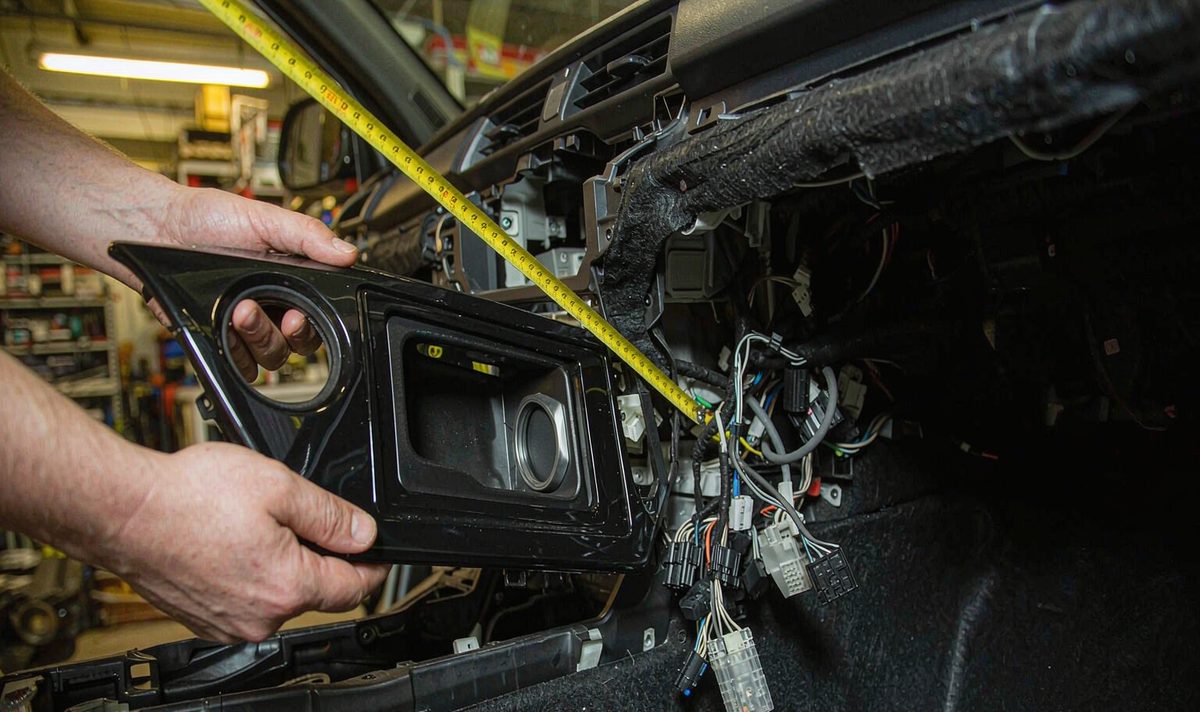
Two more measurements decide it. Depth behind the opening, because a big panel puts its connectors further back than your factory radio ever did, and the harness needs somewhere to go. And the vent line, because a tall screen that covers your centre vents is a miserable discovery to make in July.
Tell us whether yours is left-hand drive or right-hand drive too. The dash panel and the frame aren't the same part on the two sides, and I keep seeing installers unpack a kit that's correct for the model and wrong for the side your wheel sits on. Confirm LHD or RHD before you order anything.
A bigger screen is more glass to catch the sun, and more glass to throw your shirt, the sky and the headliner back at you. In bright sun that reflection is what people actually complain about. It isn't the size. It's the reflection, and the size is what makes the reflection bigger.
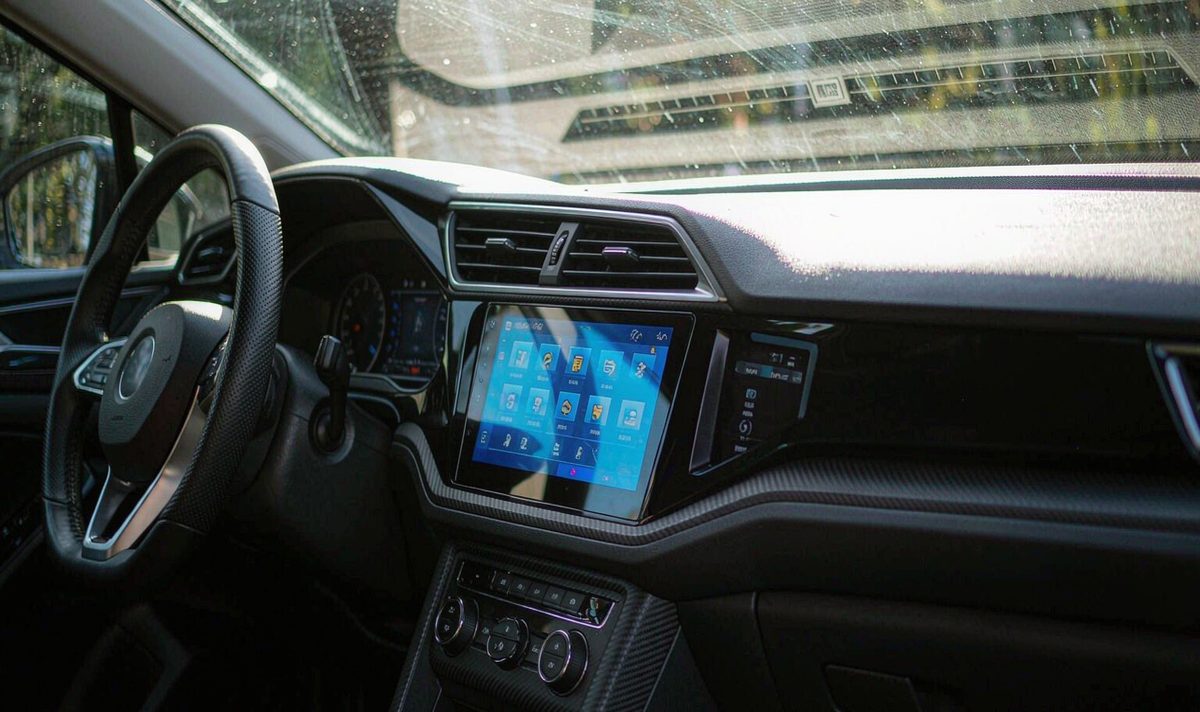
What helps, in the order I'd try it: tilt the panel a few degrees away from the side window, keep the top edge below the vent line so your eye meets the glass more squarely, and bring the brightness down at night until the panel stops lighting up your cabin. Where a deck ties brightness to the headlight signal, that's the fix. Where it doesn't, you set it by hand and live with it.
A matte screen film cuts reflections noticeably and costs very little, so it's the cheapest honest improvement on this list. What it can't do is make a washed-out panel brighter, and no film rescues a screen mounted where direct sun lands on it all afternoon.
The sightline test is free and takes a minute. Sit in the driver's seat in full daylight and look at where the screen sits. If your hand has to leave the wheel to shade it, the size is wrong for that car, however good it looked on the listing.
A larger panel isn't an upgrade in every car. In a shallow dash it means cutting trim you can't buy again, losing your vent direction, or living with a bracket that rattles - and cutting the wrong trim is a painful way to learn that. Glare you can manage. A panel that doesn't fit is the nightmare.
When a big screen install goes wrong, the cause sits in one of four places. Walk them in this order and you won't end up buying parts you never needed.
Measure the opening and the depth again. Cut a cardboard template the size of the panel and hold it against the dash. Sit in the seat and check the sightline, the vents, your gear lever at both extremes and the handbrake.
Look behind the opening. The wiring harness adapter, the CAN bus decoder box where your car needs one, the GPS antenna and the USB leads all need room, and a big panel leaves less of it than the factory radio did.
Resolution, brightness, viewing angle, and the panel's actual shape. Confirm what the specific deck ships with rather than what the family it belongs to usually has.
A different frame, a bracket, an extension lead. By this point you'll know which one, because the first three steps told you.
One fault is worth pulling out separately, because it gets misdiagnosed constantly. A screen that looks perfect at night and washed out at noon isn't faulty. That's a brightness and reflection problem: the cheap fix is a film or a few degrees of tilt, and the real fix is a panel bright enough for where it sits. The opposite complaint, a screen that blinds you after dark, is a dimming setting, not a hardware fault.
Which one are you looking at? Test it parked with your hand shading the glass, and you'll know in ten seconds. Is it better to buy the smaller panel and avoid all this? Not always - it depends on your dash, not on the size chart.
A retrofit android head unit for older car usually lands on the smaller panel. The opening is narrow, the cavity behind it is shallow, and the dash was never drawn with a tablet in mind.
This is where the 12.3 earns its money: a map and your music on screen at once, something the passenger can actually read, and buttons big enough to hit on a rough road.
The middle ground. Big enough to read with gloves on, small enough that a bracket can hold it when the chassis flexes. Check the mounting here, not the glass, because a rattling screen is annoying on every single drive.
Not directly. A double DIN slot is 180 x 100 mm and a 16:9 12.3 inch panel is roughly 272 x 153 mm, so it goes in with a vehicle-specific frame that replaces the surrounding trim, or on a bracket mounted in front of the dash. Check the frame listing for your model and year before you buy the screen.
Three numbers: the width and height of the opening, and the depth behind it. Take the width and height with the trim still on if you can, because that's the surface your frame has to meet. Then measure how far back the cavity goes before it meets a duct or a bracket.
Partly, and cheaply first. Tilt the panel away from the side window, keep the top edge below the vent line, drop the brightness at night, and fit a matte screen film. None of that makes a dim panel bright, so if your screen sits where direct sun lands on it, the mounting position is the real problem.
Almost always yes. The frame is cut for one panel size and one dash shape, and the two sizes aren't interchangeable in the same fascia. Where a range shares a frame, the listing says so; where it doesn't, assume you need the other kit.
Because the sun is on the glass, not because the panel is failing. Reflection off a large panel plus a brightness setting that's fine after dark gives you exactly that combination. Test it parked with your hand shading the screen: if it becomes readable, you've got your answer, and it's glare.
Usually the mounting, not the screen. A large panel on a floating bracket puts more load on the fixing than a small one, and any slack shows up as a buzz. Check the bracket and its screws first, then the trim clips around the fascia, before you suspect the unit itself.
Send us four things and we'll tell you which panel and frame go in: model and year, whether it's left-hand drive or right-hand drive, a photo of the dash, and what the factory system is. That's enough for us to check it before anything ships. We ship worldwide to Australia, North America, Middle East and Europe.
Read the full support scopeMore from this series: HDMI video input on aftermarket car screen: compatible device list.
Zhuhai WITSON Industrial Co., Ltd. - Tel: +86-756-8120312, 8120211, 8120212.