Wiring harness - where plug and play usually stops
The screen is on the bench, the dash is open, and the plug in your hand is the wrong shape. Most of the time the radio is fine and the harness is the thing nobody checked.
Last month a customer sent me a photo of three harnesses on his kitchen table and asked which one his car needed. He'd already bought the screen, and he'd never photographed the plug behind his old radio.
I've fitted these units for sixteen years, and the harness is where the surprises live. The radio is a known quantity; the harness depends on the car in your driveway, and no listing can promise it'll fit.
The short answer: you need the harness that matches the plug your car already has, feeds every signal your screen wants, and doesn't cut the factory loom. Which one depends on the plug, the bus, the amplifier and the car's age.
Plug and play describes a connector, not your car. The harness ends in a shell that clicks into the plug your factory radio used, so nothing gets cut and nothing gets soldered. That's convenient, and it's where the phrase stops being useful.
Three things have to line up before any of it works, and they're the shell, the pinout and the signals, though only the first is easy to check. You can see it. The pinout is what sellers get wrong, since two cars can share a plug shape and swap pins between years. The signals are what buyers forget: your screen wants ignition, illumination, a reverse trigger and often a speed pulse, and plenty of newer cars hand none to the radio cavity.
What I see most is a harness that fits and is wired wrong, which is worse than one that doesn't fit: at least the wrong plug tells you something while the dash is apart.
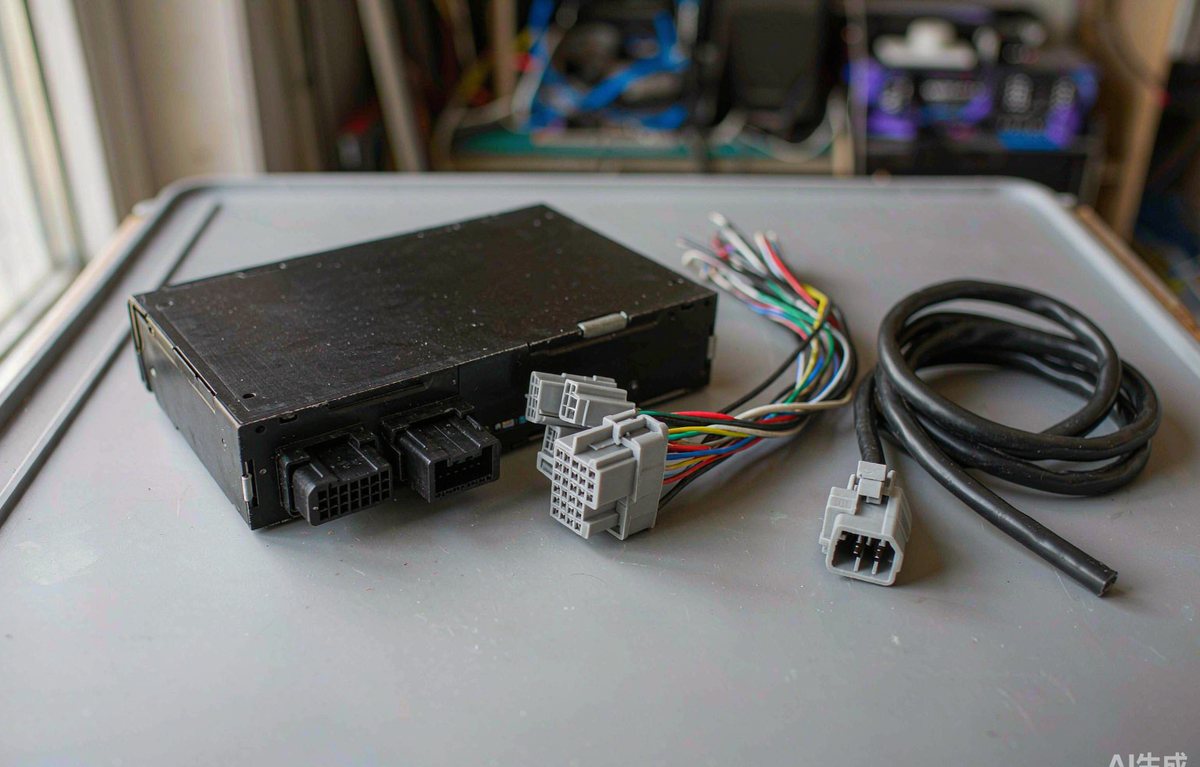
Pull the old radio out and photograph each plug straight on, plus the label and the VIN plate, in daylight without a flash, because a black plug shot with a flash is a black rectangle with no pin detail.
Power, speaker and bus circuits in one block. Common on newer cars, and it usually means an interface box in the kit.
One block for power, one for speakers. The older arrangement, and a plain adapter lead often covers it.
Often the factory amplifier or the antenna module. Miss it and your harness clicks in while the sound stays off, which is annoying to chase.
Your photo beats any description, and I keep seeing it save more orders than any spec sheet: two cars built the same month can differ by trim, market and the audio the first owner paid for.
Think of the harness as a list of jobs and tick each against the listing. A lead that does five isn't a bargain if you need the other three.
Two get missed constantly, and they're the ignition feed, which leaves a unit that boots when a door opens or never at all, and the amplifier remote, which is why a harness can be perfect and still silent.
Nearly every listing falls into one of these. The price gap is mostly the electronics, not the copper.
| Family | What's in it | Works when | What it costs you |
|---|---|---|---|
| ISO adapter lead | Two standard blocks on one end, your car's plug on the other. Shells and wire, no electronics. | The car already gives ignition, illumination and speaker feeds at the cavity | Cheapest option. It can't invent a missing ignition feed or decode wheel keys. |
| Vehicle-specific harness with an interface box | The same lead plus a small box that reads the bus and outputs ignition, illumination, reverse, speed and key presses. | The car has a data bus, or the cavity has no key-on wire | More money, and the box firmware is the product. A cheap one can be a model year behind your car. |
| Full harness with relay and amp interface | Everything above, plus a fused feed, a relay and either a level converter or a bypass lead for the factory amplifier. | The car is factory amplified, or draws more at the radio than a plain lead should carry | Bulkiest and dearest. More joints behind the dash means more to secure later. |
How I read it: find your plug, then ask which jobs the car already does. Whatever is left over picks the family, and the family picks the price.
One habit saves returns. Treat the android car stereo wiring harness adapter as a part with a version number, not a universal accessory. One seller can ship three versions for three trim levels of your model, and the label is all that separates them. At WITSON the lead is listed per model, which keeps the box and the plug matched.
In our experience this one catches fitters who've done dozens of installs: in a factory amplified car the radio cavity often has no speaker wires at all: the radio sends a low-level signal to an amplifier under a seat or in the boot, and that amplifier drives the speakers. Fit a speaker-level harness and you'll get silence, or sound so thin and grating that you blame the unit.
You need a harness that carries line-level signal and, just as importantly, wakes the amplifier. Some units give you preamp outputs on RCA leads plus a remote wire; some give neither, and no adapter invents them. Check whether the unit you're buying has an android head unit external amplifier preamp output at all, because that's hardware, not a setting.
You run new speaker wires to each speaker, or use a bypass lead that plugs into the amplifier's output connector and feeds the existing loom. It's more work, and where the amplifier handles the chimes or hands-free audio, it changes how the car behaves, which is awkward.
One detail gets skipped again and again: the trigger wire. Feeding it from the power antenna output works on some cars for years; on others the amplifier wakes for a second and sleeps again, because that output only lives while the tuner does.
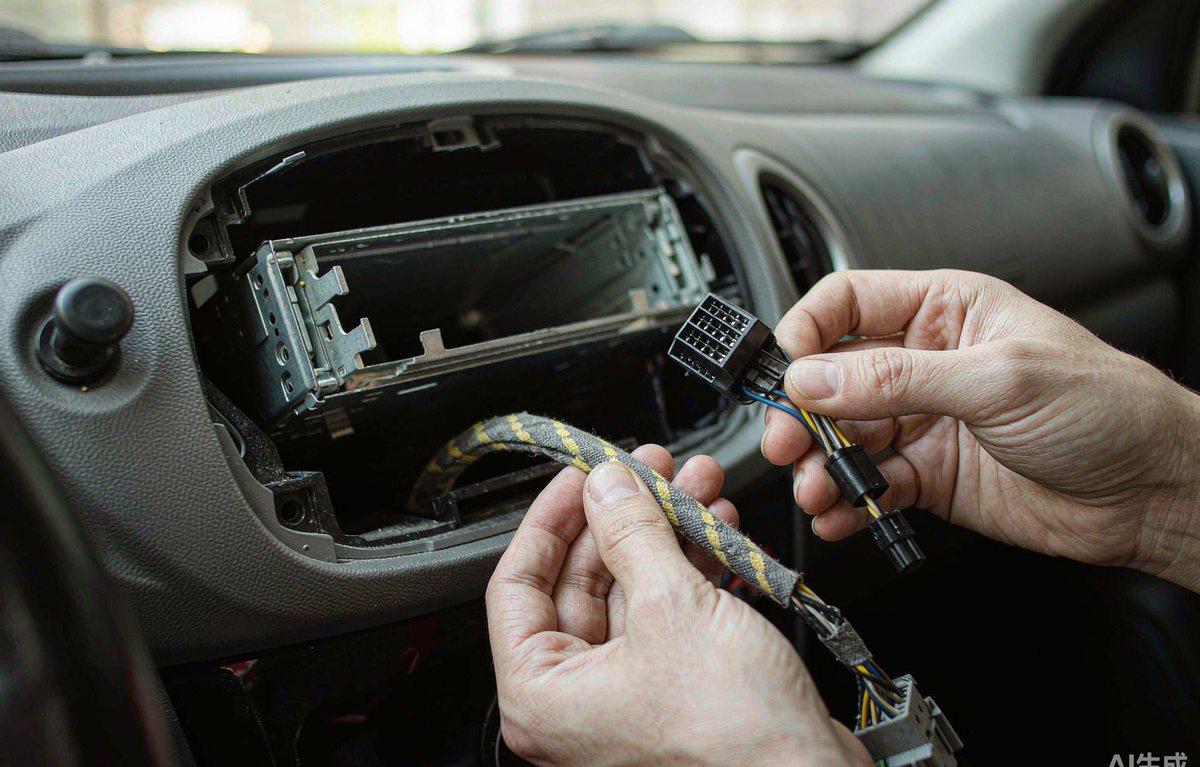
Four situations where the phrase on the box collapses.
There's nothing to decode, and the wheel buttons work by switching resistors. You need a unit that reads resistance and a lead with analog key wires, not a box with forty profiles. This is where retrofit android head unit for older car jobs turn expensive: the wrong kit looks right and does nothing.
More common than people expect, and I've seen cars that looked fully wired. The cavity has power, ground and a bus pair, and no key-on wire, because the factory unit was told when to wake by a message. The interface box makes that feed, and if it doesn't list your year, you're the one testing it.
Some premium systems put the amplifier on a fibre ring instead of copper. A copper harness can't feed it, tedious if you've already bought the lead. Your choices are a bypass or an interface built for that ring.
The plug sits mid-dash, so it's the same on left-hand drive and right-hand drive builds of most cars, though the steering column isn't. If your harness carries steering wheel control wiring, confirm which one your car is before ordering: the column module and clock spring differ. Market trim is the other trap: the same model sold in Europe and North America can carry different radio hardware, so a lead that fits one build may not fit the other.
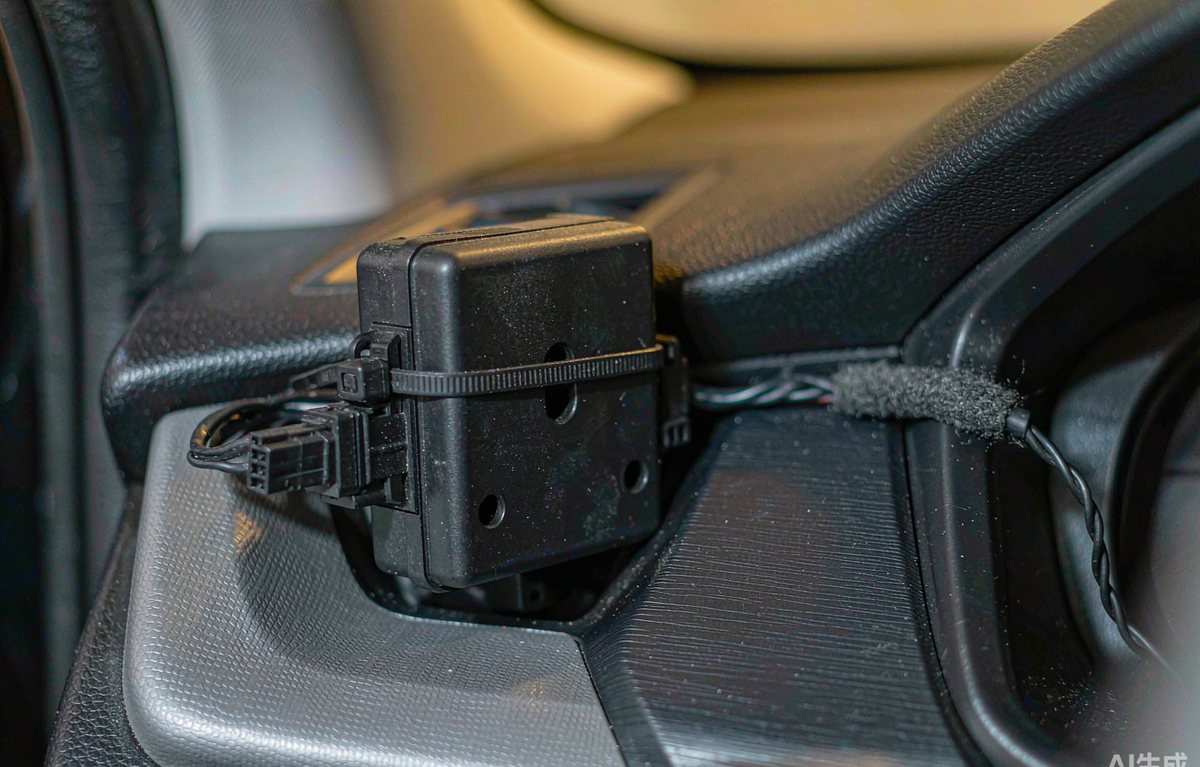
If your car has a bus, the small box does the work a loom used to do. That's why an android head unit CAN bus decoder box matters more than the wire attached to it: the wire is a commodity, the box is a set of vehicle profiles, and when yours is missing the harness fits and half the car goes quiet.
Here's the message I'd send any seller, including us. Five minutes of typing prevents most wrong orders.
Then ask three questions. What does your harness feed directly, and what does it leave to the interface? Does the box make an ignition feed? What happens to the amplifier? A seller who answers all three without guessing understands the part.
Fit the harness before you screw the unit home, and test in order: power, sound from all four corners, dimming, camera, then wheel buttons. If something fails, the dash is still open.
Most units in the range are listed with the harness and interface their model needs, and a few older models share one lead.
01Do I need a separate harness if the new unit comes with one in the box?
Usually not, but read the bag. A boxed lead is often universal: power, ground and four speaker pairs. It rarely includes the interface your car needs for ignition, wheel keys or the amp, so on a bus car it's a start.
02Can I just cut the factory plug off and splice the wires?
On an old car with no bus it often works. On a modern car it's the expensive shortcut: you lose the plug you'd need to refit the factory radio, and you're cutting into a bus pair.
03Why does the clock reset every time I start the car?
The two feeds are the wrong way round.
04Is it possible to keep the factory amplifier with an aftermarket screen?
Yes, if the unit has preamp outputs and the harness can wake the amplifier. Without both, no adapter helps: it's a bypass or a different unit.