Install consumables / what holds a screen in a hot dash
The tape is rarely the weak link. The number on its datasheet and the temperature of the plastic it lands on decide whether your screen stays put, and on a sun-baked dashboard those two numbers are much closer than most people expect.
I've found that a screen frame will lift at one corner in the first hot week after an otherwise careful install, and the tape took the blame. It was doing exactly what its datasheet promised. The problem was the surface it landed on, because the top of a dashboard behind glass isn't a shelf at room temperature. It's a solar collector.
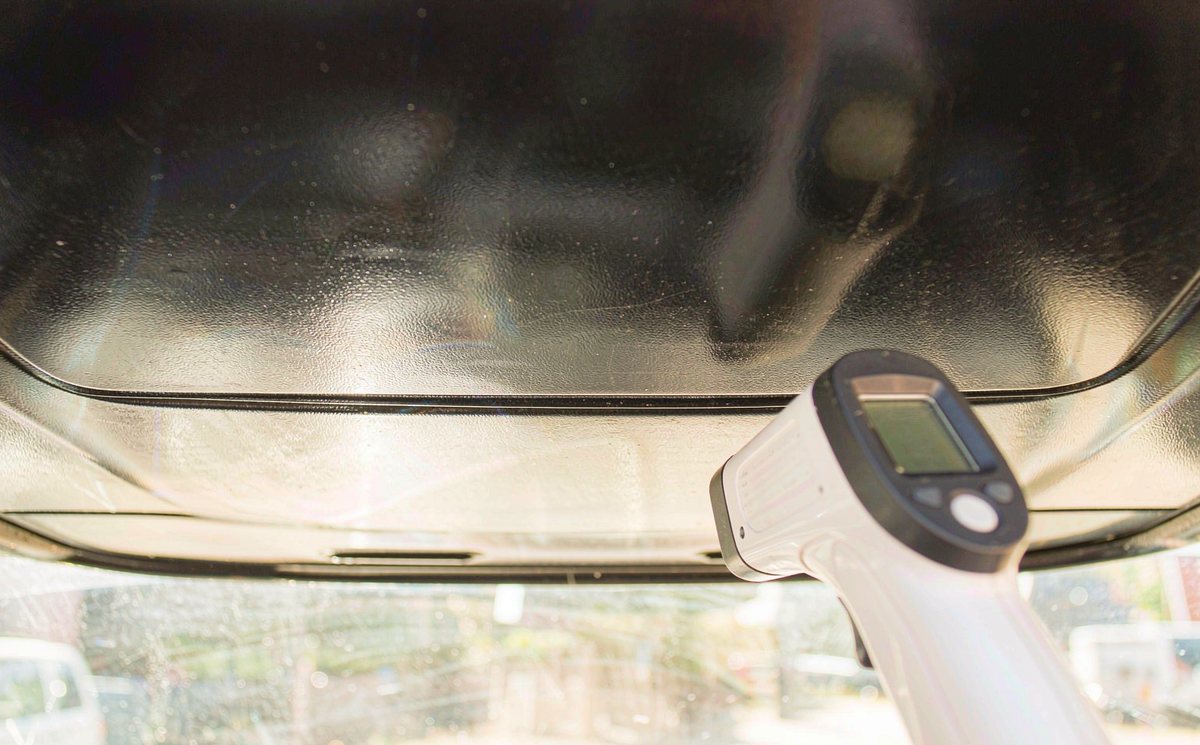
The measurements are blunt about this. In a study from Arizona State University in the United States, six vehicles parked through summer days showed dashboard surfaces averaging around 69 C after roughly an hour, peaking near 85 C, while cabin air sat near 47 C. Contact measurements taken in Baghdad put dashboards close to 99 C. Carmakers qualify interior trim against a black-panel temperature of about 89 C, so the factory parts are built for that heat, and whatever you stick on top has to survive it too.
That gap between air and surface is where the buying decision actually gets made. A tape rated 80 C continuous is already behind on a July afternoon, even though the weather app said 34 C when you parked. Your hand won't tell you the difference either, and that's the awkward part: the panel that burns your fingers is the one you need a real number for. If the same heat also leaves your screen sluggish to the touch, that's a separate symptom with its own causes - why a car touchscreen responds slowly after long heat exposure is where I'd start on that one.
Most tape packs print one temperature and leave you guessing what it means. Read the datasheet instead, because the same product usually carries two figures and only one of them describes daily life. The table is what a proper acrylic foam tape datasheet states, using 3M VHB 5952 as the worked example.
| Figure | What the datasheet defines it as | What it means under a screen |
|---|---|---|
| Long-term 93 C | Holds 250 g per 0.5 sq in of static shear for 10,000 minutes at that temperature | The figure to compare against your dash, not the headline number |
| Short-term 149 C | Four hours of exposure with no loss of room-temperature shear | A process limit, for paint ovens and curing. Not a summer afternoon |
| Minimum 10 C | Lowest surface temperature at which the adhesive is specified to bond | Below it the adhesive is too stiff to wet out, and the joint starts compromised |
| Static shear 250 g | Load per half square inch, held for about seven days at 93 C | Creep resistance at heat. A heavy screen on a small patch is where this bites |
| 1.1 mm core | Total thickness of the foam core, liner excluded | Conformability over textured or slightly curved plastic. Thin tape bridges less |
Read it as a pair: the long-term figure has to clear your dash peak with room to spare, and the shear figure has to carry the weight you're hanging on the area you've got. Everything else is detail.
A bigger panel changes the arithmetic for your frame. On a 10.25 inch android head unit the glass and the housing carry more mass, and that mass sits further from the bond line, so a strip that was fine on a seven-inch screen is doing harder work on yours. Same tape, more area, or a thicker core to follow the curve of the fascia.
This is the order I'd spend time in before you buy anything, and it doesn't cost more than twenty minutes and a roll of masking tape.
Write those numbers down before you open a parts site, because by the time you've driven home you'll have forgotten which panel ran hot.
What I see most often is people buying by colour and width, then finding out the tape they picked was a rubber-based foam rated for indoor use. That's the common trap, and it's an annoying one to repeat.
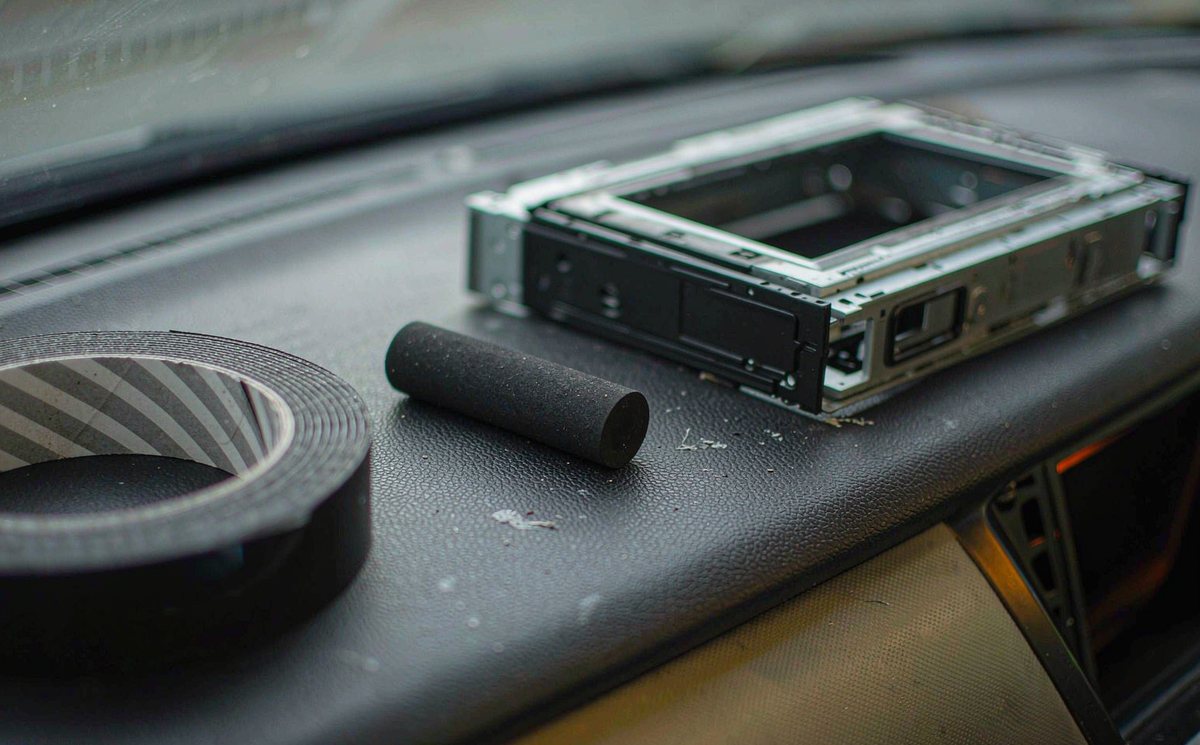
If you only change one habit this year, change this one. A good tape on a dirty surface loses to a modest tape on a clean one, and in our experience that single line explains more comebacks than any product choice.
The usual culprit is dashboard dressing. Silicone shine products leave a film that migrates into the plastic, and adhesive won't stick to it no matter how long you press. Wipe your panel with a 50/50 mix of isopropyl alcohol and water on a lint-free cloth, then let the film flash off. Two passes, turning the cloth, beat one heavy scrub.
Then look at what the plastic actually is. Most dashboard fascia is ABS or polycarbonate and bonds readily. Some trim panels, and a lot of aftermarket brackets, are polypropylene or polyethylene - low surface energy, and they need an adhesion promoter made for those plastics. If your strip peels off leaving no trace at all, that's the signature, and more pressure won't change it.
Old residue has to come off completely. A plastic scraper and a little adhesive remover, worked along the grain, then the alcohol wipe. A blade lifted at an angle gouges the grain and leaves a shadow line you can't hide, which is maddening on a panel you'll be looking at every day. It matters more on a retrofit android head unit for older car jobs, where the plastic has spent a decade baking and the surface layer is already chalky.
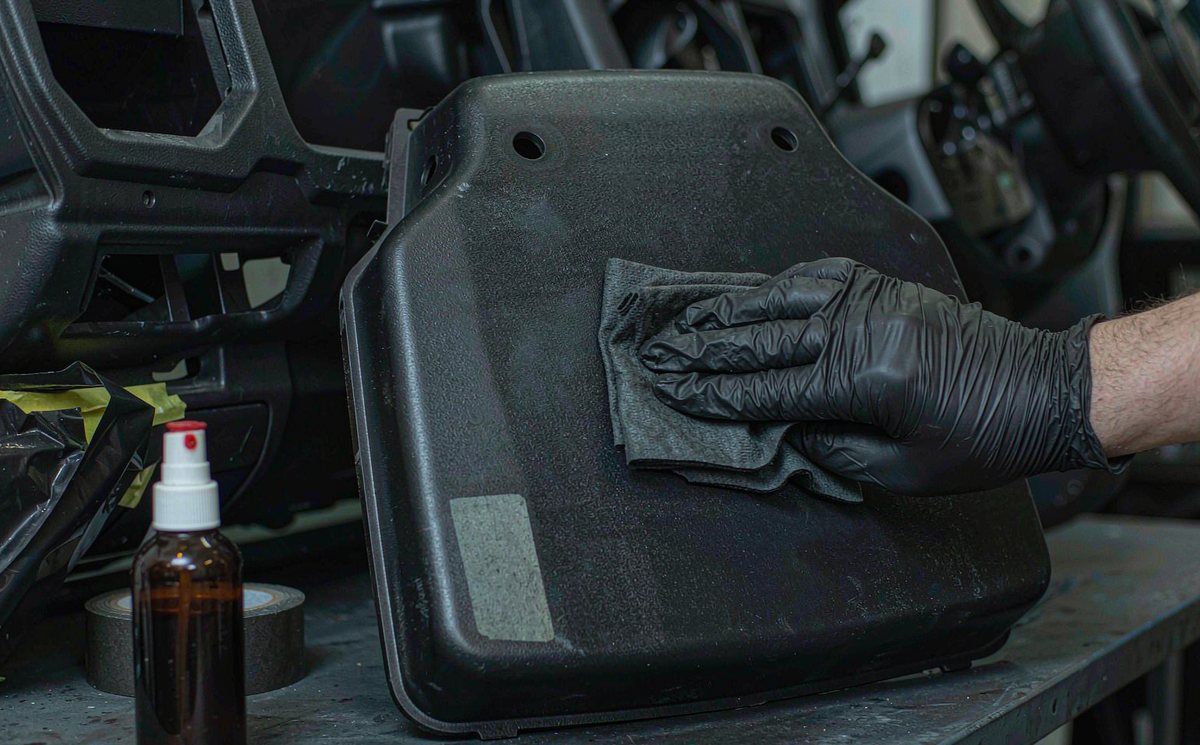
Three steps, and the third is the one everybody skips because the car needs to go back on the road.
Alcohol wipe, promoter if the plastic needs it, and bring your panel somewhere above 10 C. In winter that means indoors overnight, not a minute with a heat gun.
Lay the strip, then roll it with a small hard roller. Hand pressure leaves air at the edges, and the edges are what lift first.
Acrylic foam builds most of its strength over the first few days. Support your frame with tape or a wedge and don't hang the full weight on day one.
Application temperature catches out more installs than any other factor. What I hear most often is that nothing looked wrong at the time. That 10 C minimum is a surface temperature, not an air temperature, and a cold panel pulls the adhesive stiff before it can wet out. The same cold morning that makes an android head unit cold weather touch response feel sluggish will turn a good tape into a bad one, so if you're fitting in winter, bring your trim indoors overnight and work in a heated bay.
Here's the part that saves the most money. Tape is excellent at sealing, damping rattles and closing a gap. It's poor at carrying a structural load through years of heat cycles, because pressure-sensitive adhesives creep under constant shear, and heat speeds that up. A frame that let go usually turns out to be a joint working past its temperature rather than a bad batch.
So let the mechanical fixings do the holding. A double din android head unit dash kit exists for exactly this: the cage and side brackets take the mass into the factory mounting points, and the tape only holds the trim ring and the gap. If your kit came with brackets and you're leaning on tape instead, you're asking a foam strip to do a screw's job. That's a silly way to spend an afternoon.
Two more places to stop and think. Don't bond anything across an airbag seam or over a panel that covers one - that's a safety decision, not a trim one. And check which side your dash brace and the loom run on: whether the car is left-hand drive or right-hand drive changes where the flat, load-bearing plastic actually is, so measure before you cut strips.
If you're fitting one of our units and the frame still won't sit flat, that's usually a bracket question rather than an adhesive one. Send the model and the car's year and we'll tell you what the kit includes and where the mounting points land. The frames are also listed on the WITSON product pages if you want to compare shapes first.
The bonding and assembly side of these screens is documented, including how frames are bonded before a unit is packed: look inside the WITSON factory.
01Do I need an adhesion promoter for dashboard plastic?
Only for low-surface-energy plastics, which in practice means polypropylene and polyethylene panels and some aftermarket brackets. ABS and polycarbonate fascia normally bond without one. The giveaway is a strip that peels off leaving no residue on the plastic at all.
02Can I use ordinary double-sided foam tape for a car screen?
You can, and it'll often hold for a season. Most hardware-store foam tape uses a rubber-based adhesive with an indoor rating, and a sun-baked dash runs well past that.
03Why does the tape hold all winter and let go in summer?
Because heat is what it was never rated for. Adhesive softens as it warms, so the same load that sat still at 20 C starts to creep at 70 C, and creep shows up as the frame sliding a millimetre at a time until one corner lifts. The joint didn't fail suddenly; it walked there.
04How do I remove old adhesive without damaging the dash?
Warm it gently, work a plastic scraper under the edge along the grain, then soften what's left with an adhesive remover and wipe with alcohol. Skip the blade.