Factory tour - Zhuhai plant
One fixture, one sequence, one unit at a time. We filmed the line that builds our 9-inch and 10.1-inch head units without a script, because the three questions buyers ask before an order aren't the ones a catalogue answers.
Every buyer asks the same three questions before a first order: who actually builds this, what gets tested, and what happens when something is wrong. A catalogue page can't answer any of them. A walk down the line can, which is why this one runs sixty seconds with no cuts in the sequence and no voiceover selling anything.
The units in the clip are our 9-inch and 10.1-inch head units, the two sizes that make up most of the aftermarket-fit side of the plant. Same building as the OEM-style panels, same benches, same people. Nothing was staged for the camera and no station was skipped, because a skipped station looks exactly like a station that doesn't exist.
A catalogue shows you the product. It can't show you the order the product was built in, and the order is what you're really buying.
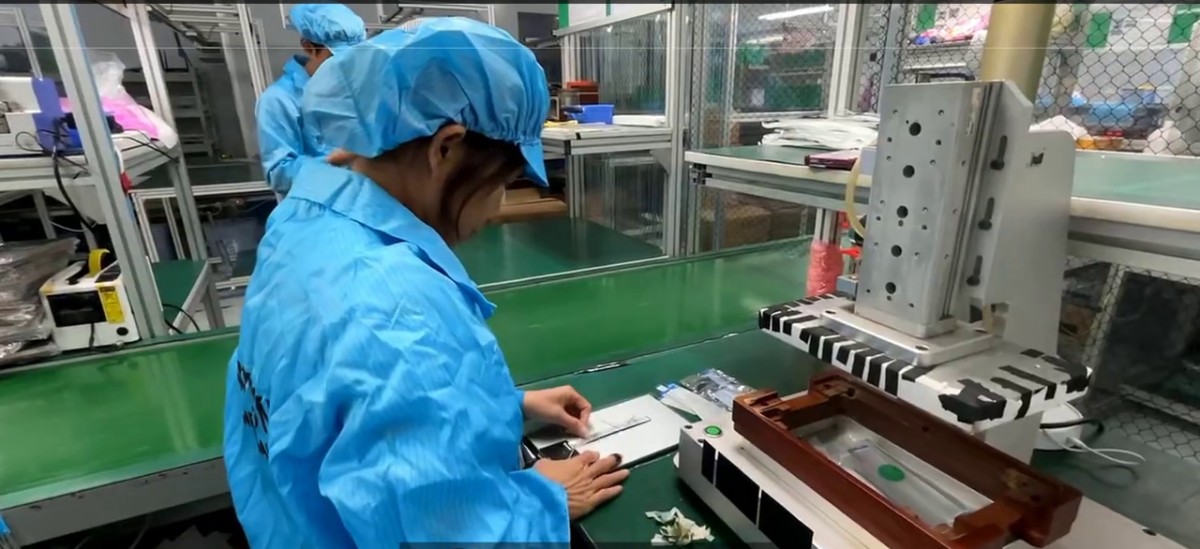
I have been on the buying side of this trade too, and the thing that used to bother me was how little of the process I could see. You get a sample, you get a spec sheet, and you get a promise. So this is the part I'd have wanted: the bench, the hands, the order. What we see on cars months later is rarely a design flaw. It's a step that got skipped at a bench like this one, and you pay for it in the dash.
The line runs six stations in a fixed order, and the order isn't negotiable. A unit that skips ahead doesn't come back to the station it missed; it gets pulled. That sounds strict for a car radio, and that is fair, because most of the failures we see in the field were decided at a bench like these, months earlier.
| Station | What happens | What it catches |
|---|---|---|
| 01 Assembly | Unit seated in its fixture, one sequence | Wrong build, missing part |
| 02 Screen check | Screen inspected by hand before the frame | Dust, scratches, poor bonding |
| 03 Function test | Every unit powered and exercised | Dead keys, boot faults, no display |
| 04 Torque | Screws run to a set torque | Cracked frames, loose boards |
| 05 Harness | Connectors seated by hand, then checked | Half-seated plugs, bent pins |
| 06 Fixture | Pressed into a car-opening fixture | Panel that will not seat in the dash |
Two of those stations exist because something went wrong once, and you can still see it in how the benches are laid out. The screen check came after a batch where dust got trapped under the glass during bonding. The fixture came after a panel that measured correctly on the bench and still wouldn't sit in your aperture.
Station one is the least dramatic and the most important. The unit goes into the same jig it will be pressed into at the end, which means the build starts from the shape your dash will actually see, not from a flat bench. One operator, one sequence, no shortcuts.
At station two the screens are stacked on the bench with paper between them and checked one at a time before the frame goes on. That's a person looking at your screen under a lamp, not a camera. A speck of dust under the glass is maddening, because you see it every time the sun hits the panel. No spec sheet will ever mention it.
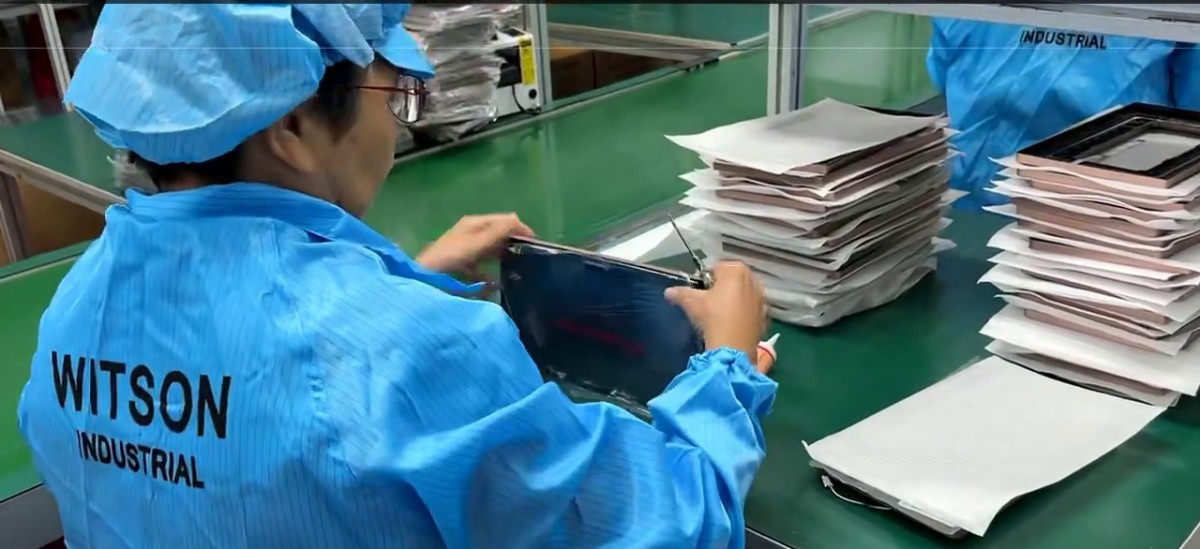
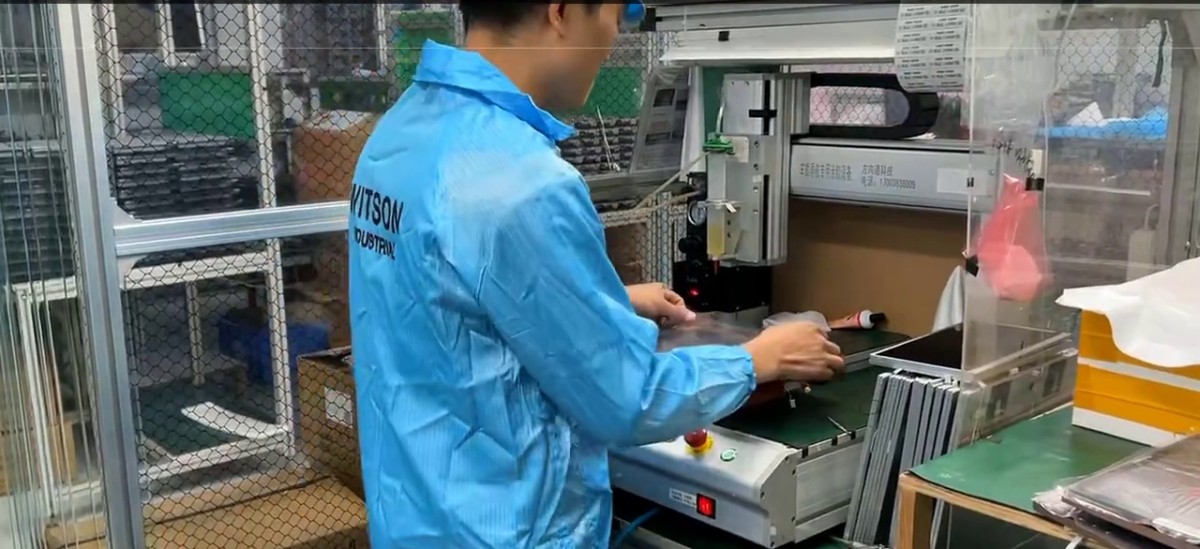
What I like about this station is how boring it is. Nobody measures anything clever here; somebody is looking, and looking again. Most quality problems in this industry aren't exotic. They're visible, if you give a person the time to look.
Each unit is powered and exercised at station three. Not a sample from the batch, not every tenth one: each unit, every time. That's the part you're paying for. The test covers the boot sequence, the display, the touch layer and the physical keys, which on a 9-inch or 10-inch fascia is where you see the cheap builds first.
Why insist on all of them? Because the cost of a dead unit isn't the unit. It's your air freight, your customs handling, your installer's afternoon and the conversation with the customer who paid for a working radio and got a black screen. A bench test takes minutes; that conversation with your customer takes months. Would you rather find the fault here or eight thousand kilometres away?
I keep hearing the argument that full testing is too slow for volume. I keep seeing containers come back over one loose plug, so the argument doesn't move me much. The opposite is true once you count returns. A unit that fails here is a unit that never becomes a warranty claim eight thousand kilometres away, and that trade is worth the extra minutes at the bench.
At station four the screws go in with a driver that's set to a torque figure. Not judged by feel, not by how tight it looks to you. You'd be surprised how much that distinction matters, because the frame on a 9-inch unit is thin plastic holding a sheet of glass, and the two failure modes sit on either side of the correct figure.
Too tight and your frame cracks at the screw boss, usually weeks later, usually in a hot car. Too loose and you get a buzz at certain engine speeds that the customer describes as a rattle and blames on the dashboard. Chasing that buzz afterwards is tedious, and it usually ends with the unit coming back out. That's a frustrating afternoon for everyone.
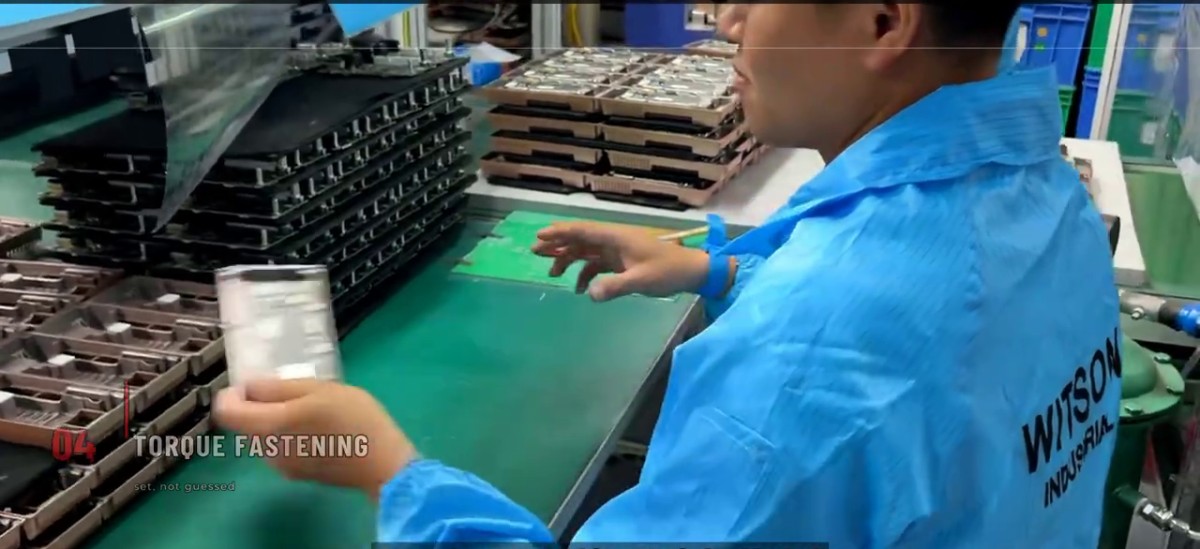
An installer once told me he could hear a badly torqued unit before he saw it, just from the way the buttons felt. I believe him. When a fascia buzzes over rough tarmac, the usual suspect is a screw that was tightened by feel. Plastic remembers what you did to it, and that's the difference between a fascia that stays quiet and one you re-torque inside a year.
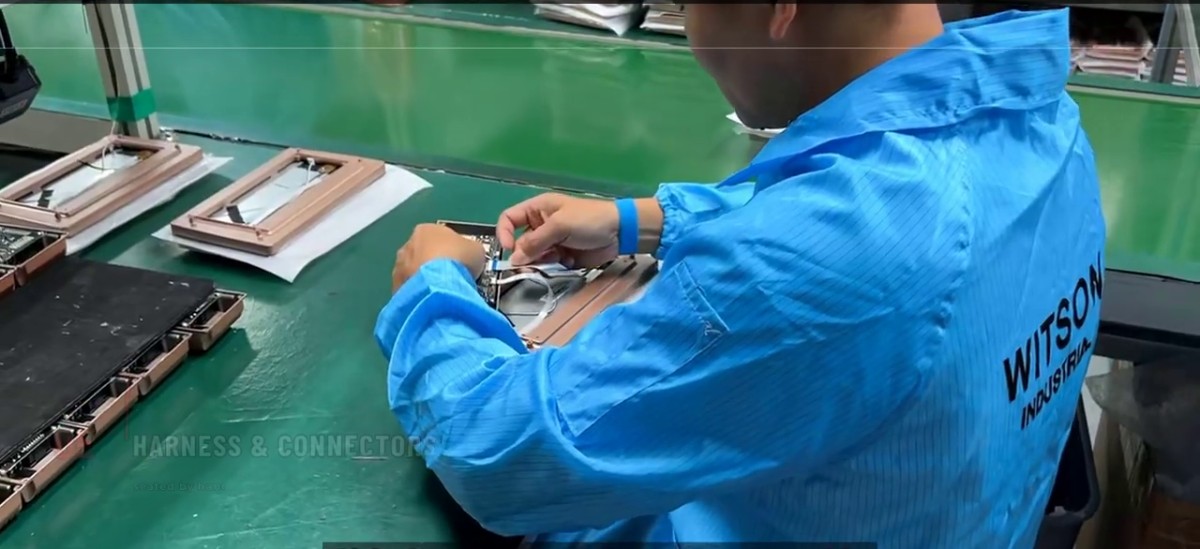
Station five is where the harness goes in. Each plug is seated by hand and then checked, which sounds redundant until you've seen a connector that looks perfectly seated, survives a tug, and still loses contact six months later on a road you drive every day. The click is the test, and a hand can feel the difference between a click and almost a click.
This is also the station where a loose harness becomes a warranty claim eight thousand kilometres away. Not because the plug falls out on its own, but because vibration works on a half-seated connector for a year and then you get a report of a camera that cuts out over bumps, or a steering wheel key that works only when the car is warm, which is annoying in a way that never quite reproduces at the dealer. It usually turns out to be the plug nobody checked.
We verify each harness against the build sheet for the order, so a 9-inch unit for a car with a factory amplifier doesn't leave with the wrong loom. That isn't glamorous work. It's the work that decides whether your install takes an afternoon or a weekend.
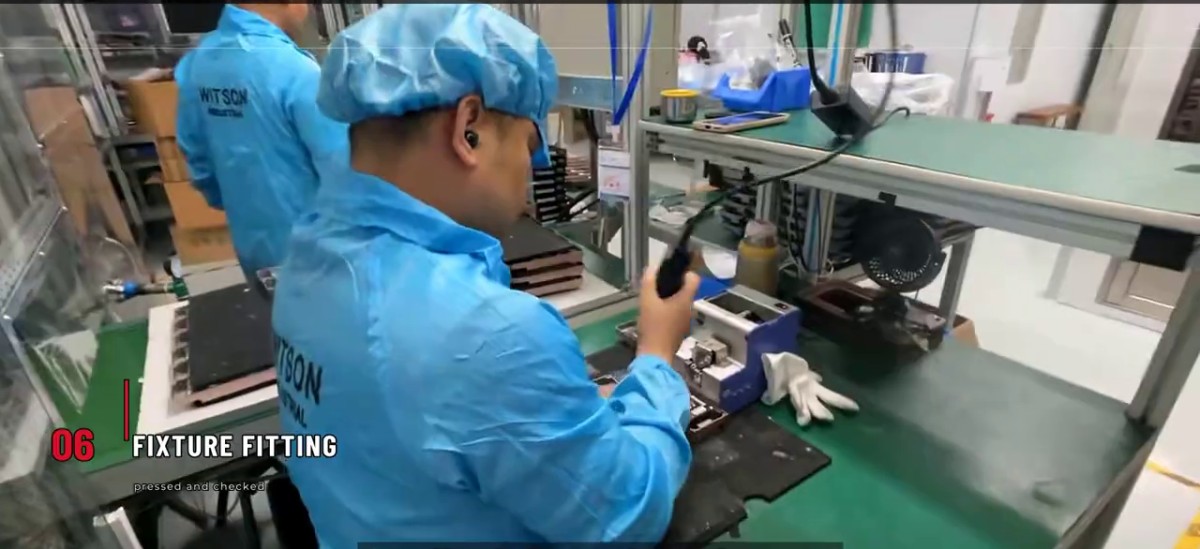
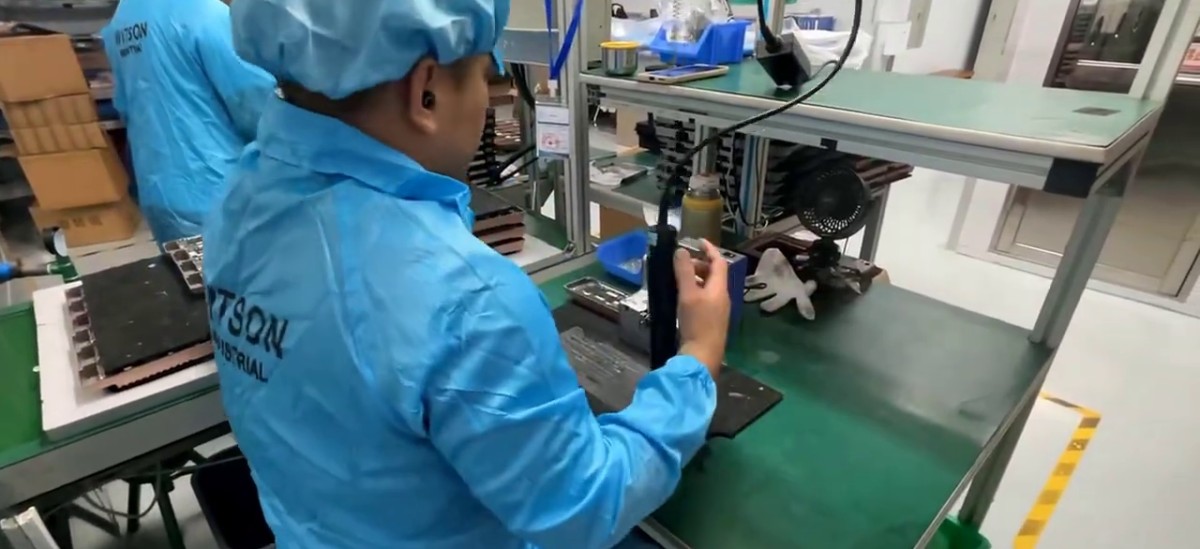
The last station is a fixture cut to the shape of a car's centre opening. The finished unit is pressed into it, and if it doesn't seat here, it doesn't ship. That's the whole idea of factory fit, and it's also the part a product photo can never prove to you.
The 9-inch and 10.1-inch sizes are where this matters most. Both use the same aperture family on many cars, so a panel that's a millimetre out on one size will look fine on a bench and sit proud on the other. On a 10-inch fascia the clip positions have less margin, and a frame that's slightly off shows as a gap along the top edge that you'd notice every day.
We ship these units worldwide, and each one you receive has been through the same six stations. Same order, same checks, whether your carton is going to a workshop in Spain, a distributor in the Middle East or a single customer in Australia.
None of this makes us the cheapest quote you'll get this month. It makes us the one where you can see where the money went, which is a different conversation and usually a shorter one.
Yes. Same six stations and the same sequence. What changes is the fixture at the end and the fascia tooling, because the panel and the clip positions differ between the two sizes. A 9-inch frame and a 10.1-inch frame don't share a jig, even when they share a dashboard.
Each unit is powered and exercised at the function test station, then pressed into a car-opening fixture before packing. Sampling would be cheaper and we don't do it.
Ask us and we will arrange a visit or a live walk-through on video for your model. The clip on this page is the short version of that conversation.
It leaves the line. No skipping ahead, no packing while somebody decides.
If you're an installer or wholesale partner interested in 9-inch and 10.1-inch head unit bulk orders or custom fascia modification, reach out to our team for special terms and technical document packages.
See the line, then decide
Tell us the model you're buying for and the volume you have in mind. We will send the fitment list, the harness note and a quote you can compare line by line.
Visit the WITSON factory pageSee a 9-inch and 10.1-inch unit
Zhuhai WITSON Industrial Co., Ltd. Tel: +86-756-8120312, 8120211, 8120212.