360 surround view - parking geometry
A gap in the bird's-eye picture is usually geometry, not a dead camera. Four of the five gaps you can see have nothing wrong behind them, and a tape measure on the ground separates them faster than any setting menu.
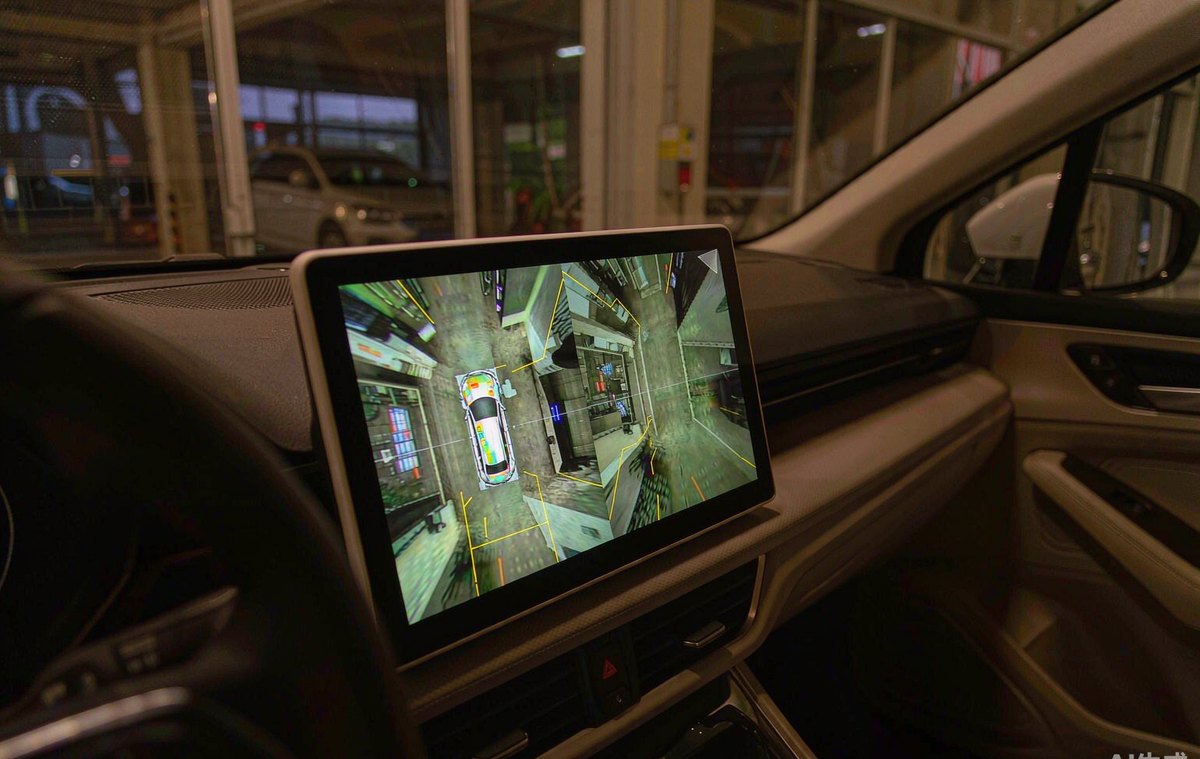
You line the car up, glance at the screen, and it looks complete. Then you step out and a bollard stands there that the view never showed. Nothing's failed - you're seeing the edge of what four small lenses can see, and the software's filled the gap with road.
A 360 view is a drawing of the ground, not a window onto it. The band against the body, the seam between cameras, the wedge past each corner and the rim of the bowl are gaps by design; only a gap at one corner points at a fault.
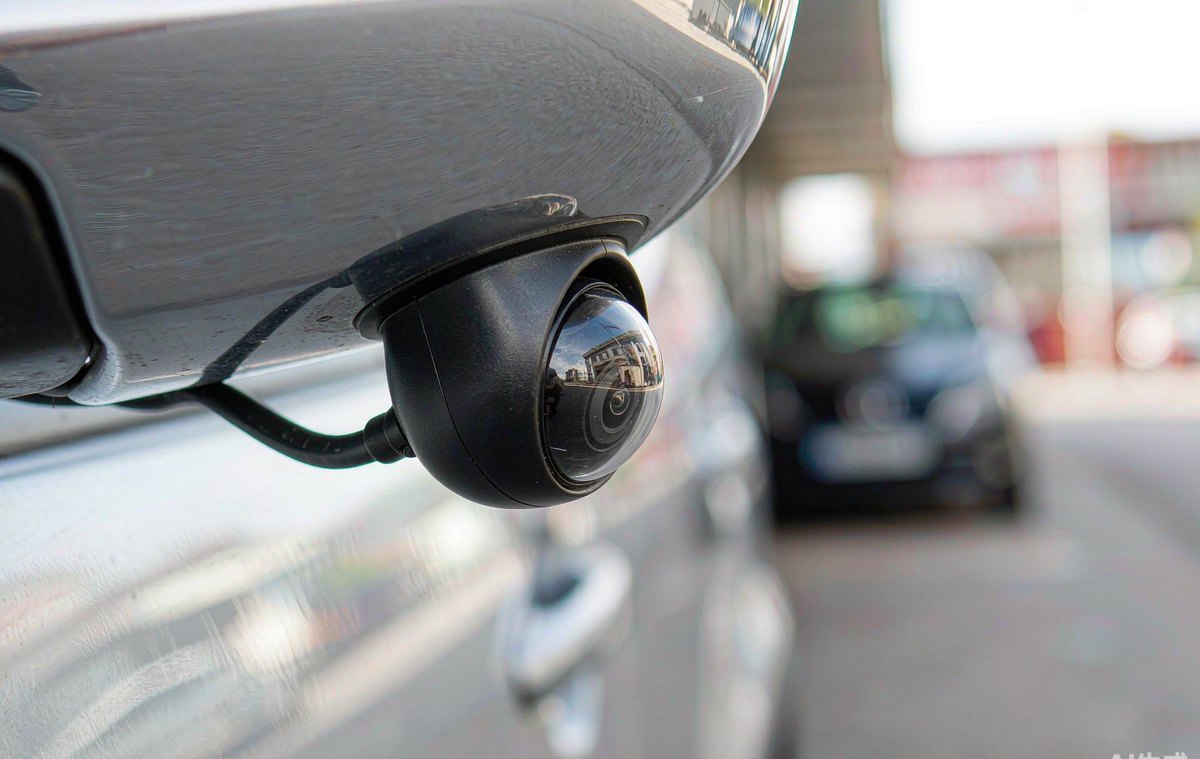
A surround-view kit is four cameras and a lot of arithmetic: one under each door mirror, one in the grille, one above your plate. Each lens is a fisheye wider than 180 degrees, which is why your own bumper corners turn up in the frame.
What reaches your screen isn't four pictures in a row. The unit un-bends each frame, projects it onto an imaginary flat plane and blends the overlaps into one map, and that's a lookup table built at calibration.
The catch is the word imaginary. Only things on that plane keep their true position. A cone lands where the cone is, a standing person's shoes land correctly while their shoulders smear outward, and a low kerb flattens into a line until your eye stops seeing it.
Most pixels in that picture are a guess about a surface assumed to be flat. Where the surface isn't flat, the guess shows.
Why the picture lies politelyIn our experience most of the blind spots I get asked about are one of these four, and the question usually arrives with a photo. Drivers in Europe and North America send the same pictures: the geometry doesn't care where you park.
These four are geometry. The fifth kind - one corner worse than the others - is the one worth chasing, and the next section tells you which.
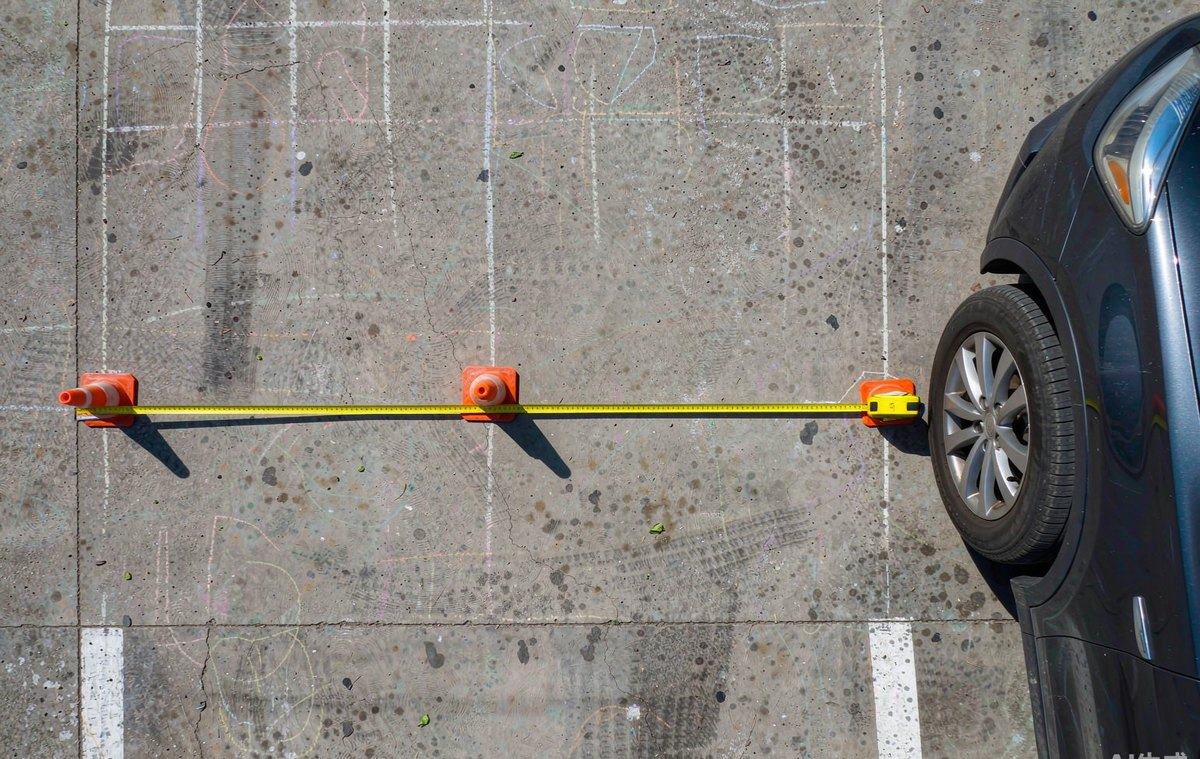
Do this on flat ground in daylight, wheels straight, engine running. You'll need a tape and something knee-high - a cone, a brick, a full bottle.
If all four corners lose the object within 20 cm of each other, that's design geometry, not a fault; if one corner drops it half a metre earlier, that camera's aimed wrong, obstructed or its seam has drifted.
Run it after dark too. Infrared LEDs throw a bright patch in the middle and grain everywhere else, so a picture that's clean at noon can look like a hole at night, which is maddening and frankly frustrating when you've just paid for the kit.
Calibration maps what each lens sees to where the pixel lands, and when it drifts your feeds stop agreeing along the seams, and the symptoms imitate missing coverage:
The procedure wants level ground, the correct mat spacing and the pattern the supplier publishes, and it's fussy about ride height - load your boot and the geometry moves enough to be annoying.
A lens with mud on it, or a camera knocked upward by a brush, gives the same mismatch as a lost calibration. Recalibrating around a bent camera bakes the error into the table and you'll chase it for weeks.
A failing feed rarely goes politely black. It rolls, tears or drops a strip that moves up the frame, and a moving strip is a piece of the picture that isn't there, so it reads as a blind spot and sends people hunting for geometry.
Look at your connectors first: inside the mirror housing, at your tailgate hinge, behind your unit. Pins push back when a mirror's folded, and a camera sharing a ground with a tail light picks up noise - a classic ground loop - the moment your lights come on. If you're reworking the door-mirror wiring harness, a proper android head unit reverse camera wiring diagram saves ten minutes.
I've found the quick test costs nothing and usually turns out to be the whole answer. With the system on, flex the harness at each joint: if the gap moves with your hand it's a connection, and if it sits still you're back to geometry.
Two more imitations: a camera that boots slower than your screen gives a second of black at start-up, and a reverse trigger on a noisy circuit cuts the view out only when the reverse lights are lit.
Once geometry and wiring are cleared, how much detail survives is a spec question, and five numbers on your spec sheet do most of it.
| Specification | What it changes | What to watch for |
|---|---|---|
| Lens field of view | How far past each corner the picture reaches | Wider is not automatically better - past about 190 degrees the edges stretch badly |
| Sensor low-light rating | Whether the map stays usable at night and in a dim garage | A bright centre hotspot means the infrared LEDs are washing out the near field |
| Panel resolution | How much of a small object survives the stitch | An android head unit 1280x720 screen resolution splits four ways into a few hundred pixels per camera |
| Frame rate of the view | Whether the picture keeps up as you creep backwards | A lagging map makes you park by guess, and guessing is where paint goes |
| Camera mounting height | The width of the shadow band beside the car | Lower is better for the near field, as long as the lens stays out of kerb height |
How I read it: resolution decides whether a bollard is a shape or a smudge, and lens angle decides whether the corner is in frame.
The arithmetic is worth doing once: a bird's-eye composite takes part of a 1280x720 panel, four feeds share the rest, so each camera gets a few hundred pixels - which is why a thin post becomes a grey smear.
Most kits offer both; they fail differently. The 2D view keeps ground geometry honest, so it's the one for kerbs and the last half metre, while the 3D bowl buys distance at the cost of stretching everything near the rim.
I park on 2D and check your corners on the individual feeds rather than asking the composite to do a job it can't. The composite's a summary, the feed is the evidence, and I've found that habit saves more bumpers than any menu setting.
Guide line colour and width are adjustable and worth setting before you blame the camera: a line 40 cm wide of the real edge reads as a gap even when the stitching's fine. There's a walkthrough in customising the parking guideline colour and width on a 360 camera.
One asymmetry: on a left-hand drive car your near-side camera is the right one, on a right-hand one it's the left. A swapped feed after a repair puts the wrong flank on the wrong side, which looks exactly like a blind spot that moved house.
The order matters: free tests, connections, calibration, specs, then parts. Skipping ahead is how people buy a camera to fix a dirty lens, which is silly.
If your geometry's even and the seams agree, you've hit the limit of four lenses; the honest upgrade is a different sensor. Ultrasonic parking sensors cover the strip against the bumper that no camera can see - the band drivers complain about.
Replace a camera only when you can prove it: swap the feeds at the unit. If the fault follows the cable it's the cable, if it stays put it's the input, and if it moves with the camera, buy the camera.
On the hardware side, an android head unit with reverse camera input that publishes its camera specs is easier to live with, and WITSON lists panel resolution and camera inputs for every model, so the published specifications are the place to look before you blame anything.
Send us four photos - one per camera feed, taken in daylight with a cone a metre from each corner - plus your unit model. That is usually enough to tell a bent camera from a drifted seam before you pay anyone to look at it.
Ask our support desk01Can I get rid of the blind spot completely?
No, and no kit on the market does. The band beside the body is blocked by your own car, and the area past each corner sits outside the lens. You can shrink both with a wider lens or an extra sensor, and learn where they are with a tape measure.
02Why does the gap only show up at night?
Because the infrared LEDs light the middle of each frame and leave the edges grainy - the geometry hasn't changed, only the contrast. Check your lenses and look for a bright patch in the centre: that's the LED ring.
03Is it possible the camera is fine and the screen is the limit?
Often, yes. Four feeds sharing a small panel leave each camera a few hundred pixels, so a low post thins out before your lens runs out of view. A sharper panel helps detail but won't widen the field.
04Do I need to recalibrate after changing a tyre or loading the car?
Only if the seams stop agreeing. Run the tape test first: if all four corners still match, leave it alone.