Car audio - fault finding
A whine that tracks engine speed is a commonly misdiagnosed fault, and the amplifier is usually innocent. What you're hearing is a small voltage difference between two grounds, and you can find it with two free tests before you spend anything.
Ground loop noise gets blamed on cheap amplifiers, tired RCA cables and the head unit itself. The honest split is different: a whine is a voltage difference between grounds, a tick is the ignition, and a steady hum is a third fault. Each has its own first move, and only some are worth your money.
Start with the sound, not the parts list. The noises you'd call engine noise come from different places; the common mistake is treating them as one fault.
A whine is a tone, not a buzz. Hold the revs steady and the note holds with them - that's alternator ripple, what's left after six diodes rectify the three-phase AC. Switch the engine off and you'll hear it go.
A sharp tick once per firing event is the ignition system, and a crackle loudest on AM radio is interference from the plug leads. A steady hum, the same with engine on or off, is usually a ground difference between two devices. It's the annoying, tedious kind of fault: you can live with it for months without noticing. Hiss with nothing playing is gain; I'll come back to it.
| What you hear | What it points at | First move |
|---|---|---|
| Whine that tracks RPM | A ground difference, or heavy alternator ripple | Unplug the RCA at the amplifier |
| One tick per firing event | Ignition system, radiated and conducted | Check plug leads and resistor plugs |
| Crackle, loudest on AM | Interference into the radio antenna | Check the antenna ground, not the audio ground |
| Steady hum, engine on or off | A standing difference between two grounds | Map where every audio ground lands |
| Hiss with nothing playing | Gain set higher than the source needs | Turn the gain down first |
If the noise only appears with the engine running and its pitch follows the revs, the rest of this article is yours. If it matches another row, I'd start there.
Here's the part that surprises people. The audio doesn't travel on the shield of an RCA cable; the centre pin carries it. The shield screens the signal and joins the chassis of both boxes. That second connection is the usual suspect.
Feed a retrofit unit's android head unit external amplifier preamp output into a separate amplifier and you've joined two grounded boxes with a cable that also gives them a second ground path. If those chassis sit at slightly different potentials, current flows along the shield to even them out. Bill Whitlock of Jensen Transformers spent years on this: the shield's own resistance turns that current into a small voltage, and because the shield is referenced to the signal, that voltage adds to what your amplifier receives.
Fit a processor and the chain gets longer. An android car stereo with DSP sound tuning adds a powered box between head unit and amplifier, so it brings its own ground reference and its own share of the problem. Check whether the noise showed up right after it went in.
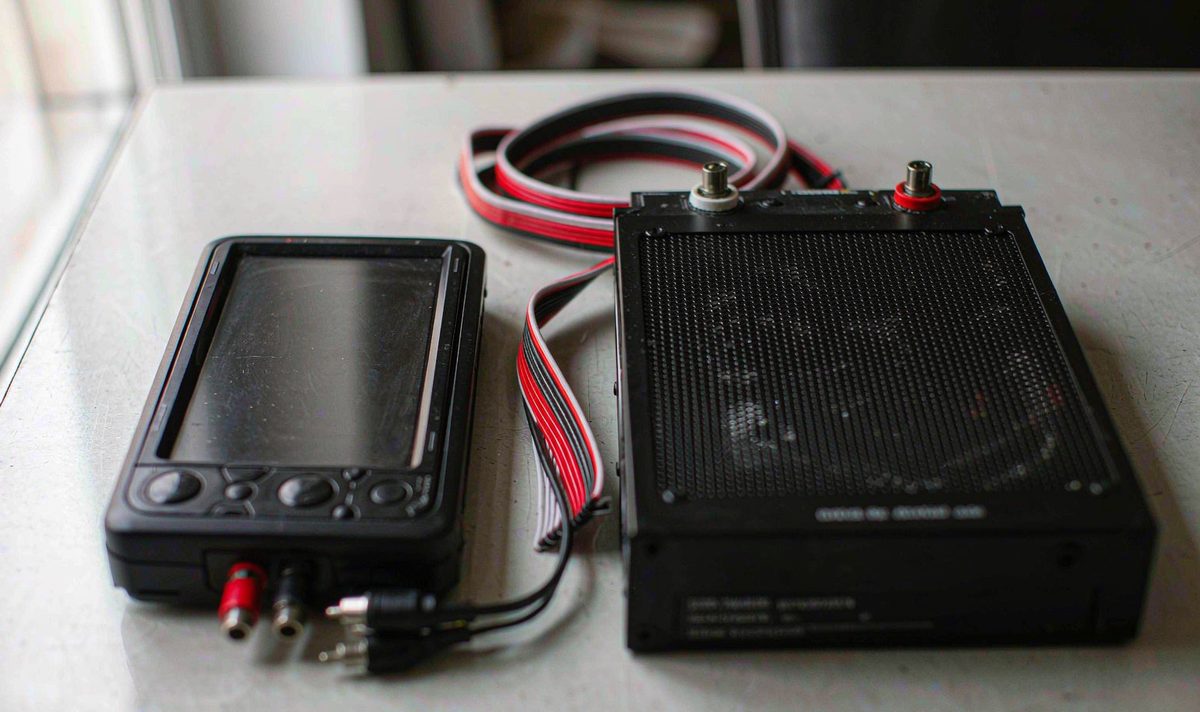
Why does the note follow engine speed? Six diodes rectify the alternator's three-phase AC, and the small ripple left on the DC bus has a frequency tied to alternator speed - which is why the note rises with the revs.
That's why the cure is rarely exotic. Balanced interconnects solve this by design: the receiver looks at the difference between two signal lines and ignores what's common to both. Car audio is almost entirely unbalanced, so give the current no reason to use the shield.
Work through these in order. The first two cost nothing and tell you which half of the car the problem lives in.
"Two grounds make a loop. The audio system will happily take the second path you didn't plan for."
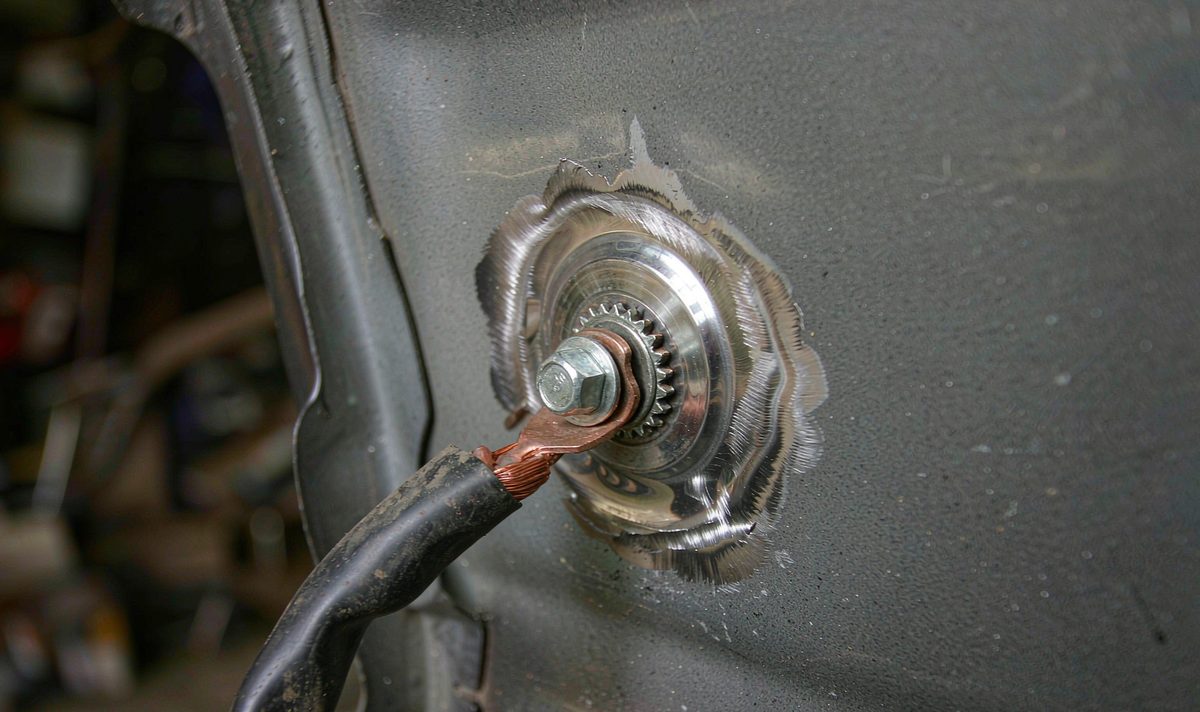
If the whine survives all six, the last tool is a ground loop isolator: a small transformer in line with the RCA cable that breaks the connection between the two chassis while passing the signal. It puts a transformer in a low-level path, so you may give up a little at the extremes. It treats the symptom, which is why you'd leave it at the end.
So where do you look first when nothing looks wrong? What I see in cars with this complaint is consistent, and it comes down to paths rather than parts.
The harness. An adapter that plugs into the factory connector carries a ground pin, and I keep finding that it is only as good as the factory ground it reaches. In our experience the shared grounds are the ones that catch people out. When a harness adapter is the only change and the noise is new, test that pin first.
The factory amplifier. Keeping a factory amplifier and feeding it from a new head unit is an android car stereo factory amplifier integration question rather than a mechanical one. Some accept a normal unbalanced line-level signal, some expect a balanced or differential input, and some want a fixed level. Feed the wrong one and you can create a level mismatch that sounds like noise, or a ground difference your input can't reject.
The run. A signal cable that shares a path with a power cable for two metres will pick up what that cable radiates into your signal. It isn't about cable price. It's about distance and angle, and changing it is free.
The supply side. The battery-to-chassis strap, the engine-to-chassis strap and the alternator-to-engine strap. When one is corroded, charging current finds its way back through thinner metal, and the resistance becomes a voltage your audio ground sees.
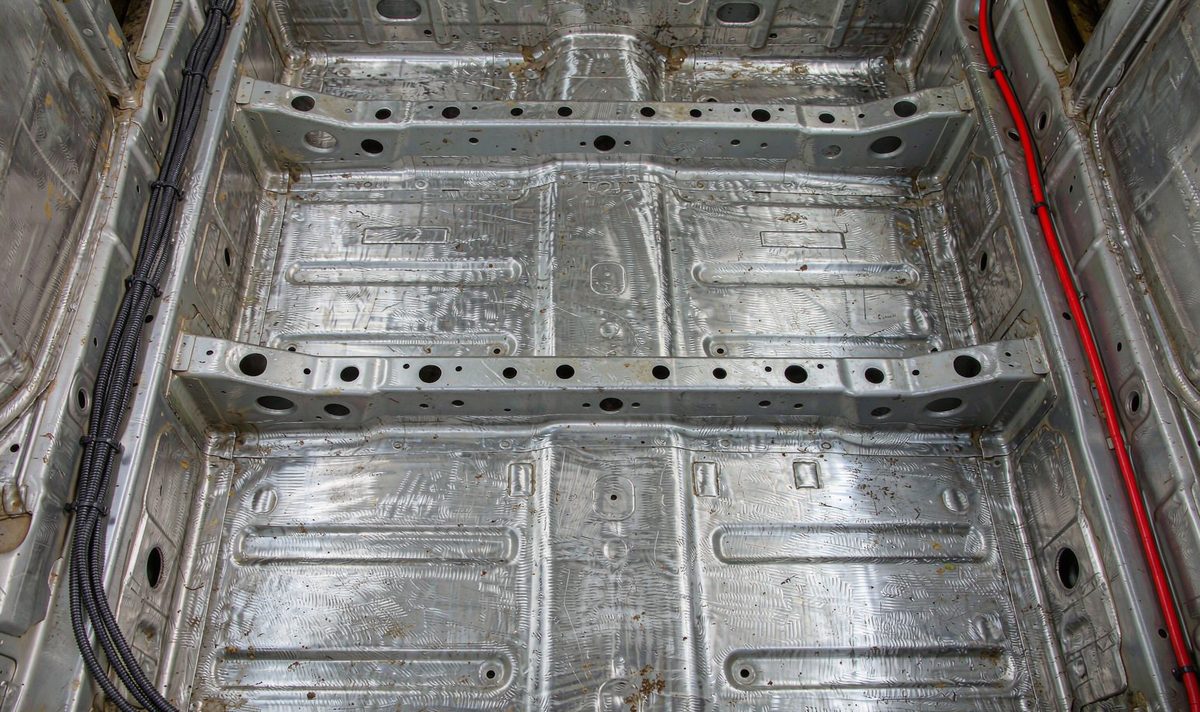
None of this is model-specific in an obvious way, which is the awkward part. Two cars of the same year and trim can behave differently because of where one bolt was tightened. That's why you check before you buy.
At some point you have to decide whether you're chasing a wiring fault or a charging fault. Two tests separate them.
First, the ripple test. With the engine running and the headlights on, measure AC volts across the battery terminals. A healthy charging system leaves only tens of millivolts; a rectifier with a failing diode leaves several times that. Numbers vary between vehicles and meters, so treat yours as a comparison, not an absolute.
Second, listen with the audio side disconnected. If the whine is unchanged, your audio is reporting a fault that belongs to the charging system, and cable tidying won't clear it. A rectifier or regulator on its way out is a workshop job.
One more thing gets misread as a ground fault, and I hear this one constantly. An amplifier gain set too high hisses with nothing playing and gets worse as you turn the volume up. That hiss is frustrating: no isolator touches it: there's no loop to break, and the gain just needs to come down to match your head unit's output.
And the honest limit. If the grounds are solid, the cables separated and the ripple test clean, and the whine is still there, the difference is likely inside one of the boxes rather than between them. That's the point to stop swapping parts and have the amplifier or the head unit put on a bench. If you're still choosing the unit, the universal one and two DIN head units are grouped by model and screen size, and harness details belong to the individual model.
Before you send anything back, gather four details: the head unit's model number, the firmware version, how the amplifier is connected, and whether the whine changes with a big load such as the headlights. With those four, an experienced installer can often tell you where to look without touching your car.
Ground noise often comes down to how one specific car is wired. Tell us the car and the head unit model, and we will check what fits before you order.
Tell us your car, we will check what fitsZhuhai WITSON Industrial Co., Ltd. - Tel: +86-756-8120312, 8120211, 8120212.
It puts a transformer in the signal path, so it isn't free. Many listeners won't hear the change on a factory system; on a quiet system with a good amplifier you might. It's a fair trade when the alternative is a whine you can't live with, and a poor first move when the fault is a loose ground.
Not on its own. It means the alternator is the source of the ripple, which is normal. What matters is how much of it reaches your audio ground, and that's decided by the wiring. Only the AC volt test at the battery tells you whether the charging side is sick.
Sometimes, and it's a legitimate fix on the supply side. Watch where it goes: a filter can hide noise while the bad connection stays put.
Rarely. Routing and shielding practice matter far more than cable price, and a basic shielded cable routed away from power beats a premium cable run alongside it. Replace cables when the shield is broken or a connector is loose, not because your system developed a whine.